From a Decayed Oak to a New Arbor Day Tree
An Azle customer’s new red oak needed more than a planting hole. We removed the old oak, assessed the decayed base, and changed the planting plan before relocating the bubbler irrigation.
Request a free estimate ↗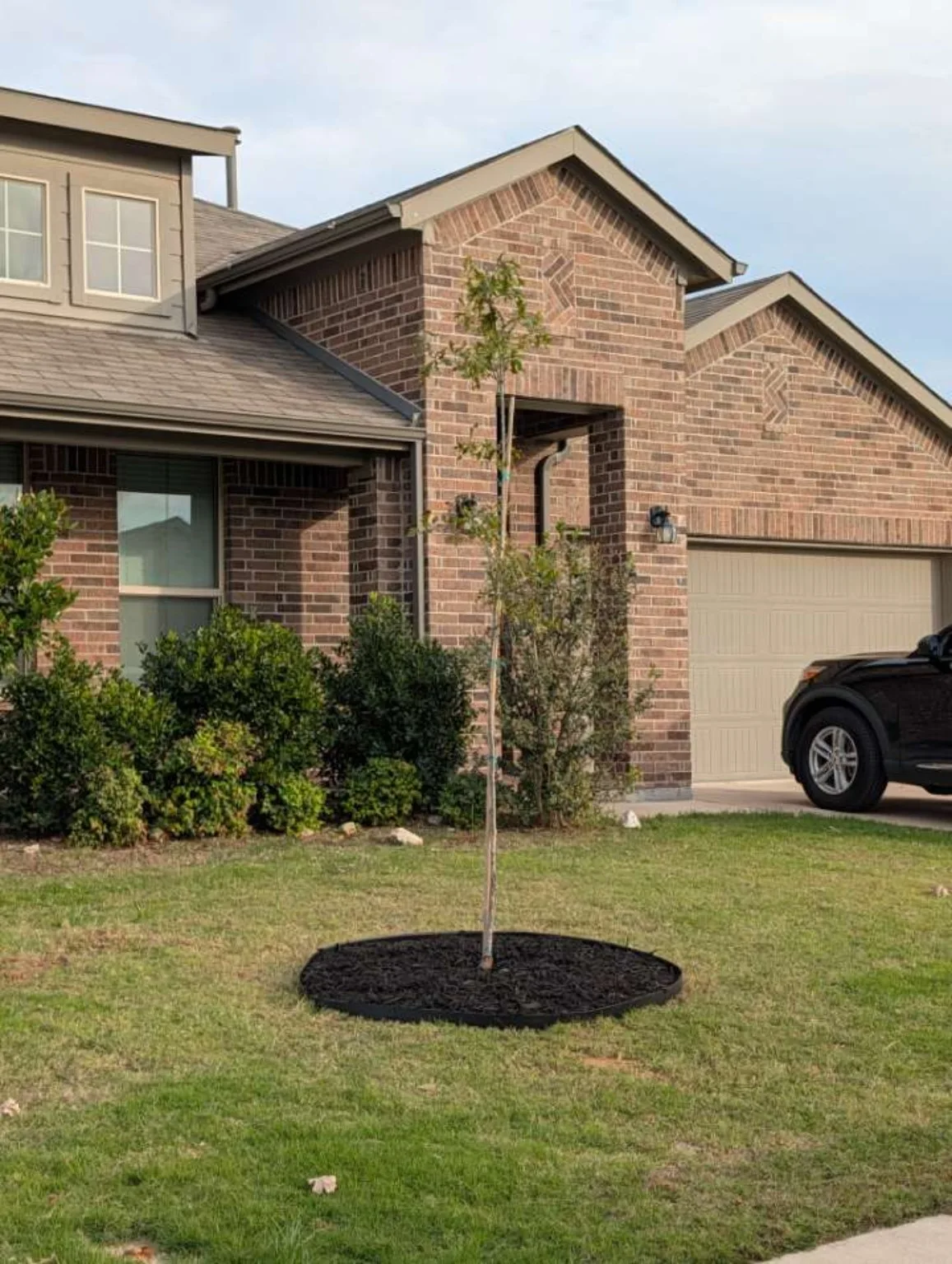
A new tree from Azle Arbor Day
This Azle customer had brought home a red oak from Arbor Day and wanted the old oak removed so the new tree could go in the same spot. Before planting, we looked at the condition of the existing tree and the original planting area.
The new red oak, like the old oak, belongs to the genus Quercus. With a fungal conk at the old tree’s base and extensive decay, we advised against reusing that exact planting spot for this replacement.
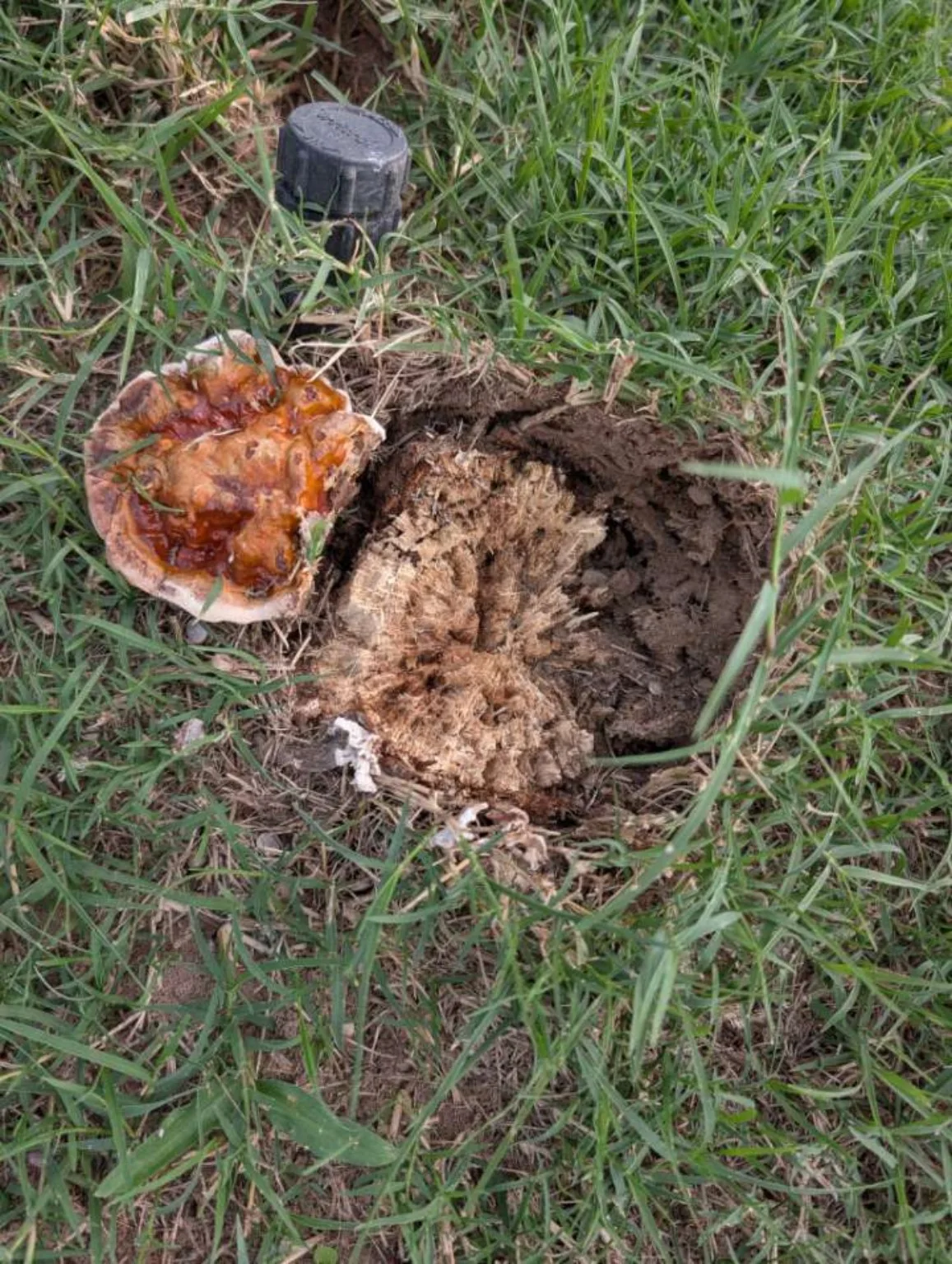
A conk and severe decay at the base
The conk and dry, deteriorated wood led us to suspect Ganoderma-associated decay. The base had lost so much strength that the old tree separated at ground level with hand pressure during removal.
That observation showed how compromised this particular tree had become. It is not a method for homeowners to test a standing tree. The suspected fungus was a field assessment, not a laboratory-confirmed identification.
Because the conk was at the base and there was no protective mulch ring, Scott also suspected that past weed-trimmer injury may have created an entry wound. The location and lack of mulch raised that possibility; they did not establish how the decay began.
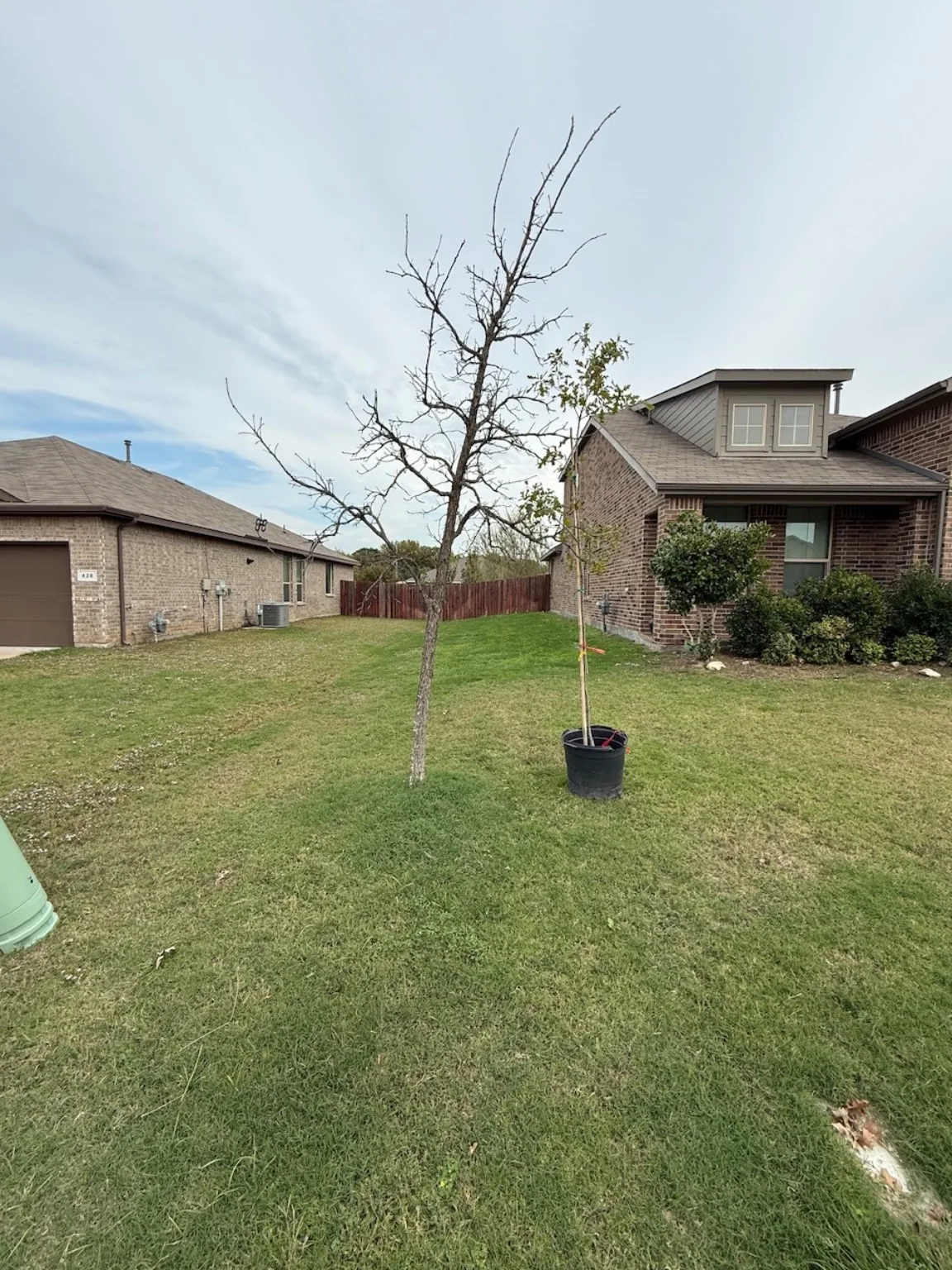
Keep a new tree from leaning against the old one
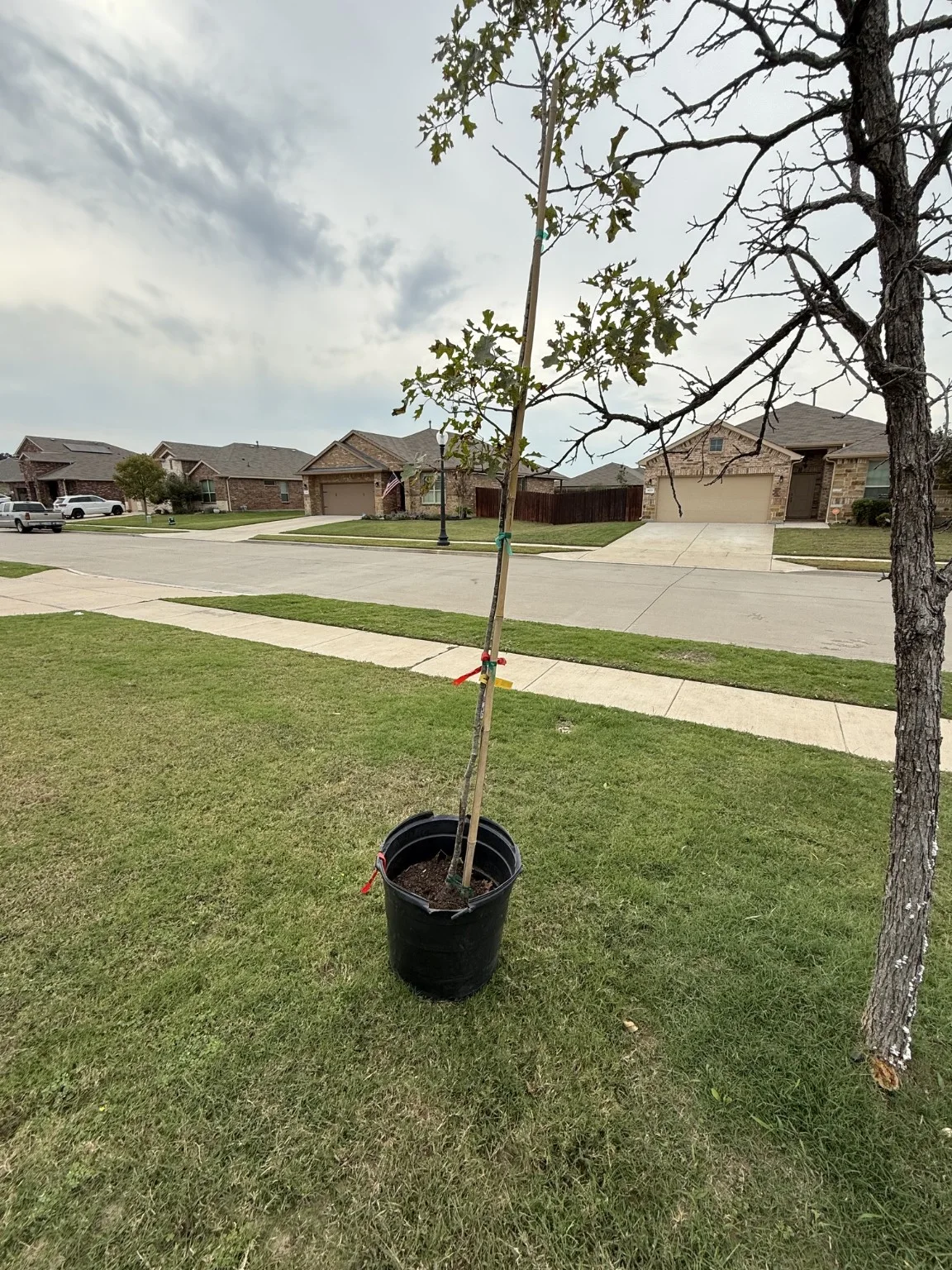
When we arrived, the customer had the new red oak leaning against the old oak. Young bark can be scraped or bruised by rubbing against another trunk or rough surface. A new tree should be held securely on its own and kept clear of decayed wood and fungal material while the work is underway.
This is an easy detail to overlook when moving a container tree around a yard. Handle it by the container or root ball rather than using the trunk as a lever, and protect the bark during transport and planting.
A different location, with irrigation moved to match
We selected a different planting location rather than putting the new red oak directly into the old tree’s decayed base. We moved and disinfected the bubbler irrigation head, adjusted the irrigation line length, and reburied the line to serve the new location.
We then planted the red oak and finished the area with a broad mulch ring. The ring provides separation between the young trunk and lawn-maintenance equipment.
Relocating the tree was a precaution based on the conditions we found. Moving the bubbler and disinfecting its head did not sterilize the soil or guarantee protection from root-decay fungi.
The planting plan starts with the site
The customer wanted to replace a tree. Our job also included explaining why the original spot was a concern and making the irrigation work with the revised plan. Removing the old oak and planting the new one were two parts of the same project.
Related local work and tree care
Read about our participation in Azle Arbor Day, explore tree services in Azle, or see more past removal projects. We also provide tree planting, tree removal, and Certified Arborist assessments.
For background on conks, wounds, and wood decay, see UC IPM’s Wood Decay Fungi in Landscape Trees.
Tell us about your trees.
Send your project details directly to Scott. We’ll be in touch to discuss your trees and the next steps.
(817) 617-8686For storm damage or an immediate tree hazard, please call. Emergency service is available 24/7.