
A detailed plan for every removal
At Case Tree Service, tree removal starts with understanding why the tree needs to come down and how to remove it safely. Every property, tree, and removal presents a different set of challenges, so we assess the tree, surrounding structures, access, and potential hazards before work begins.
As a Veteran Owned and Operated company, we believe in doing what we say, protecting your property, and giving you straightforward honest recommendations—especially when removal isn't the only answer. When it is, an ISA Certified Arborist is on site to help ensure the job is planned and completed with safety and care in mind.
When Does a Tree Need to Be Removed?
Removal is a last resort. We assess the tree’s structure, health, location, and likelihood of failure—and consider reasonable ways to preserve it before recommending removal.
- 01
Severe decline
A dead or severely declining tree may have little realistic potential for recovery.
- 02
Structural defects
Significant cracks, splits, weak unions, or a compromised trunk can increase the likelihood of failure.
- 03
Decay & root problems
Advanced decay or damaged roots can reduce the support a tree depends on.
- 04
Storm, pest or disease damage
Removal may be appropriate when damage has progressed beyond reasonable treatment or repair.
- 05
Nearby people & property
Risk to homes, utilities, vehicles, and other targets may remain too high after considering pruning or other options.
- 06
Site & construction conflicts
Some property changes make retaining a tree impractical or unsafe.
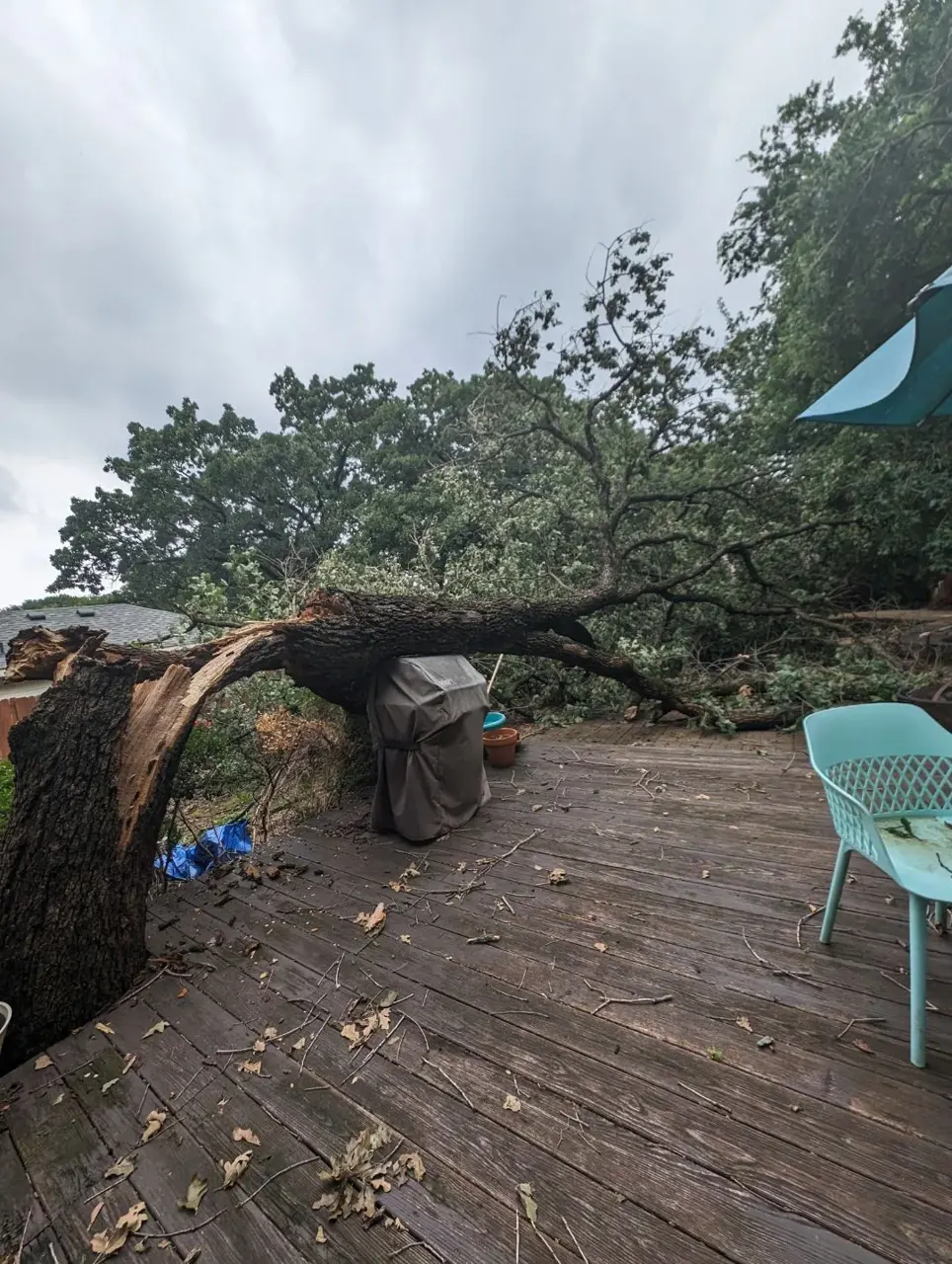
A green canopy doesn’t tell the whole story.
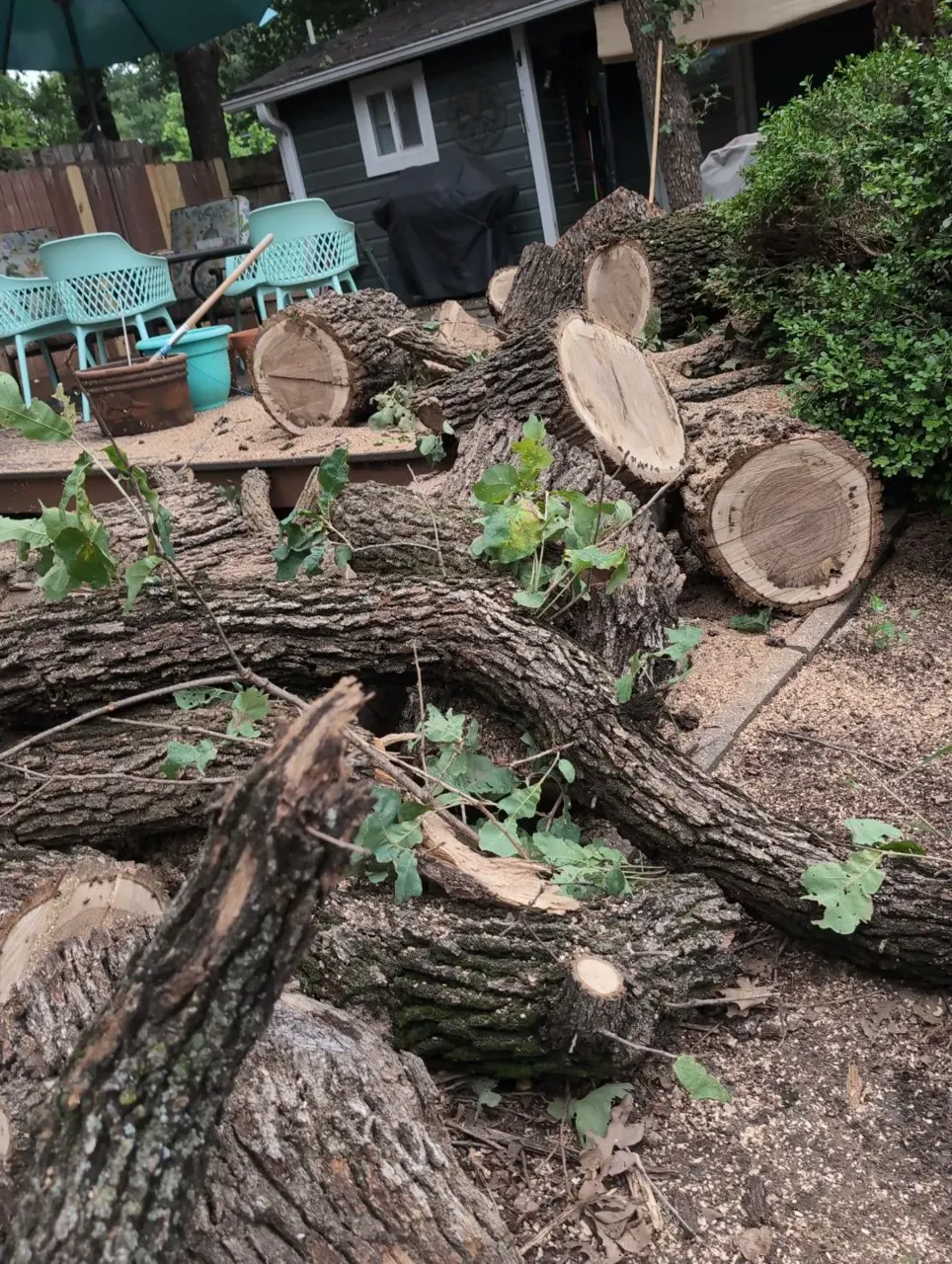
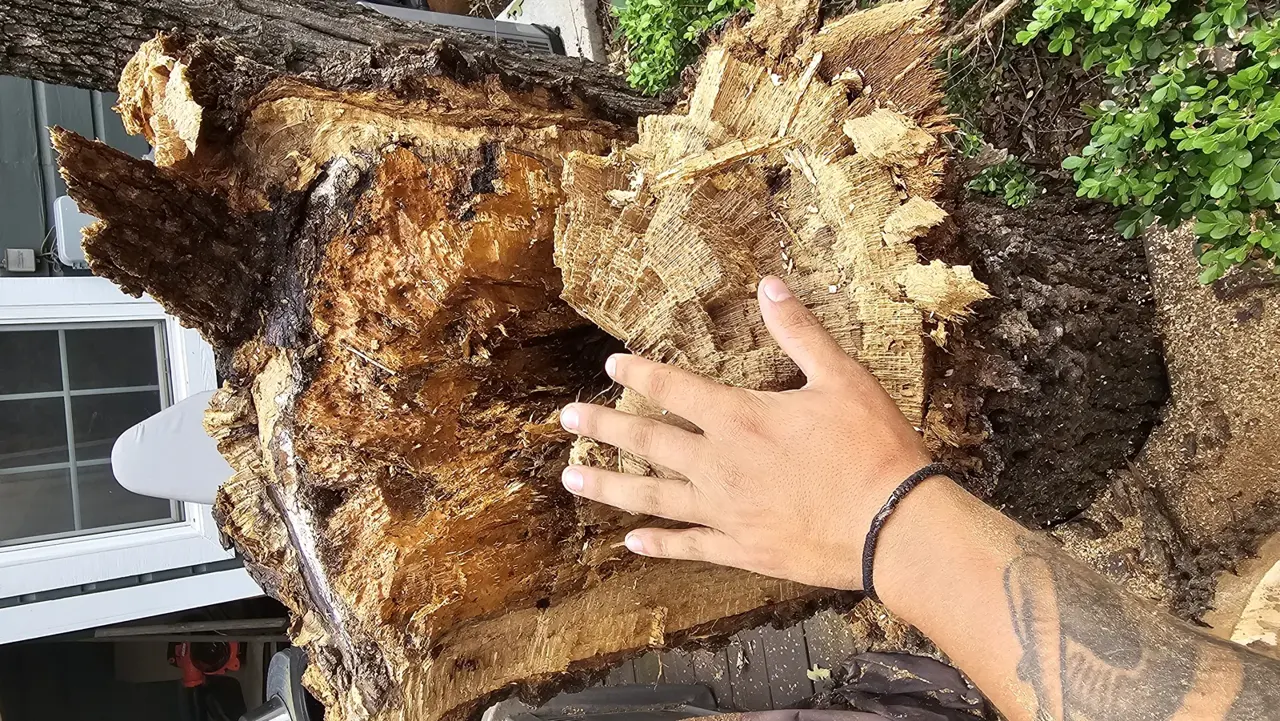
We were called to remove this tree after it failed. It had a full canopy and appeared healthy to the homeowner; even the freshly cut wood still showed signs of life.
Closer inspection revealed an old chain embedded around the tree and internal decay. This project shows why an assessment considers structural condition as well as foliage.
How We Plan a Tree Removal
Estimate, Planning & Time Required
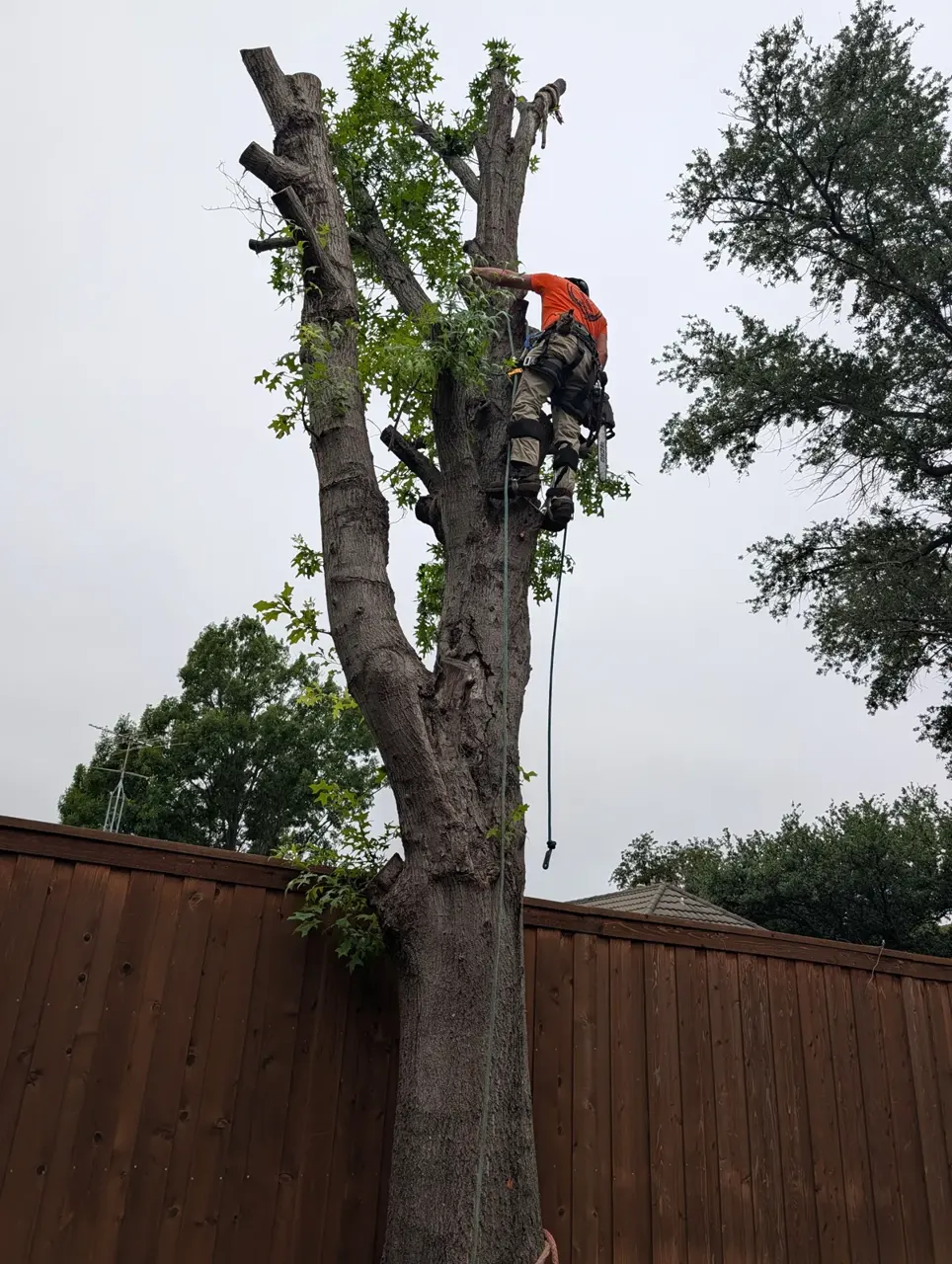
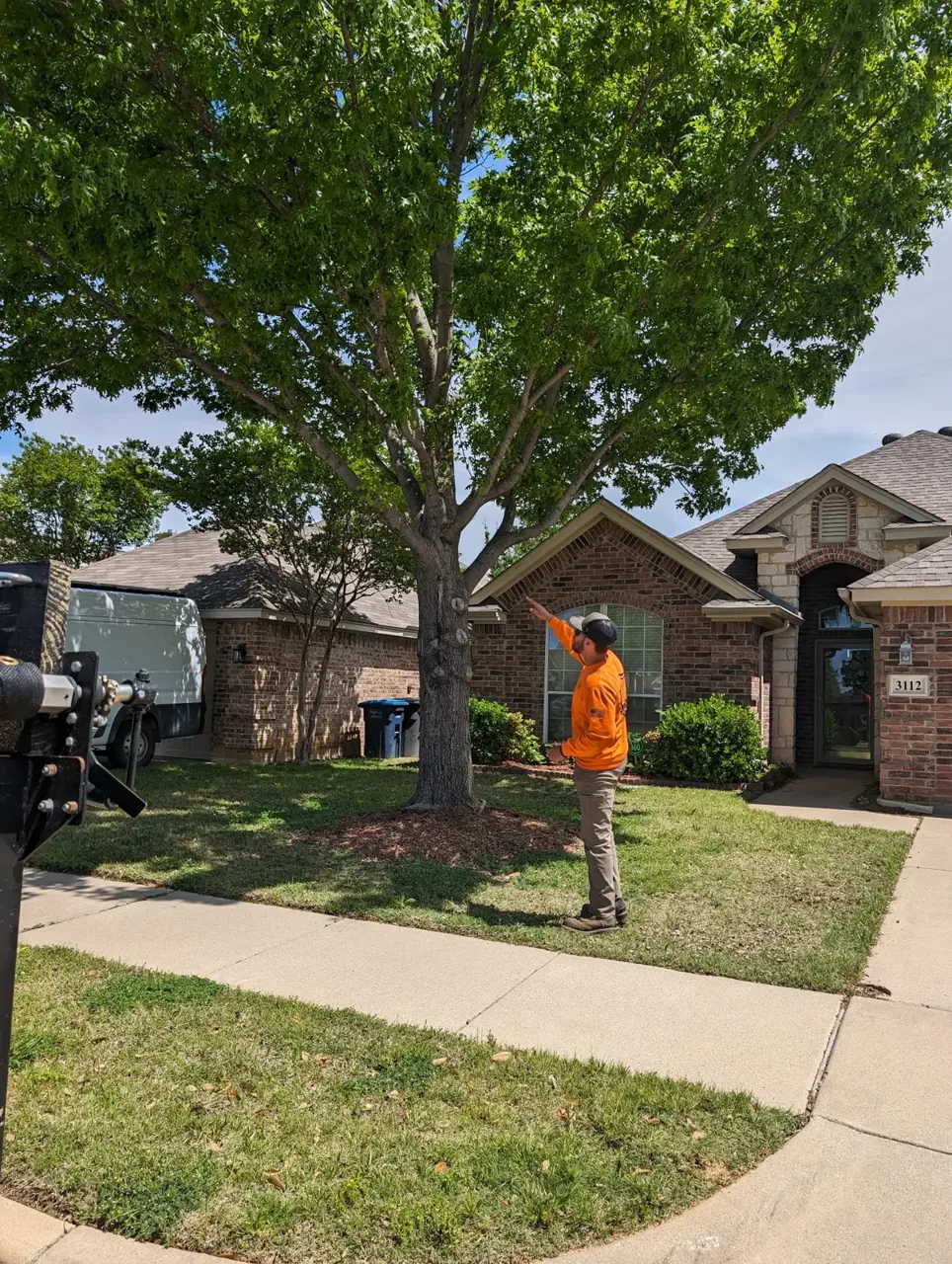
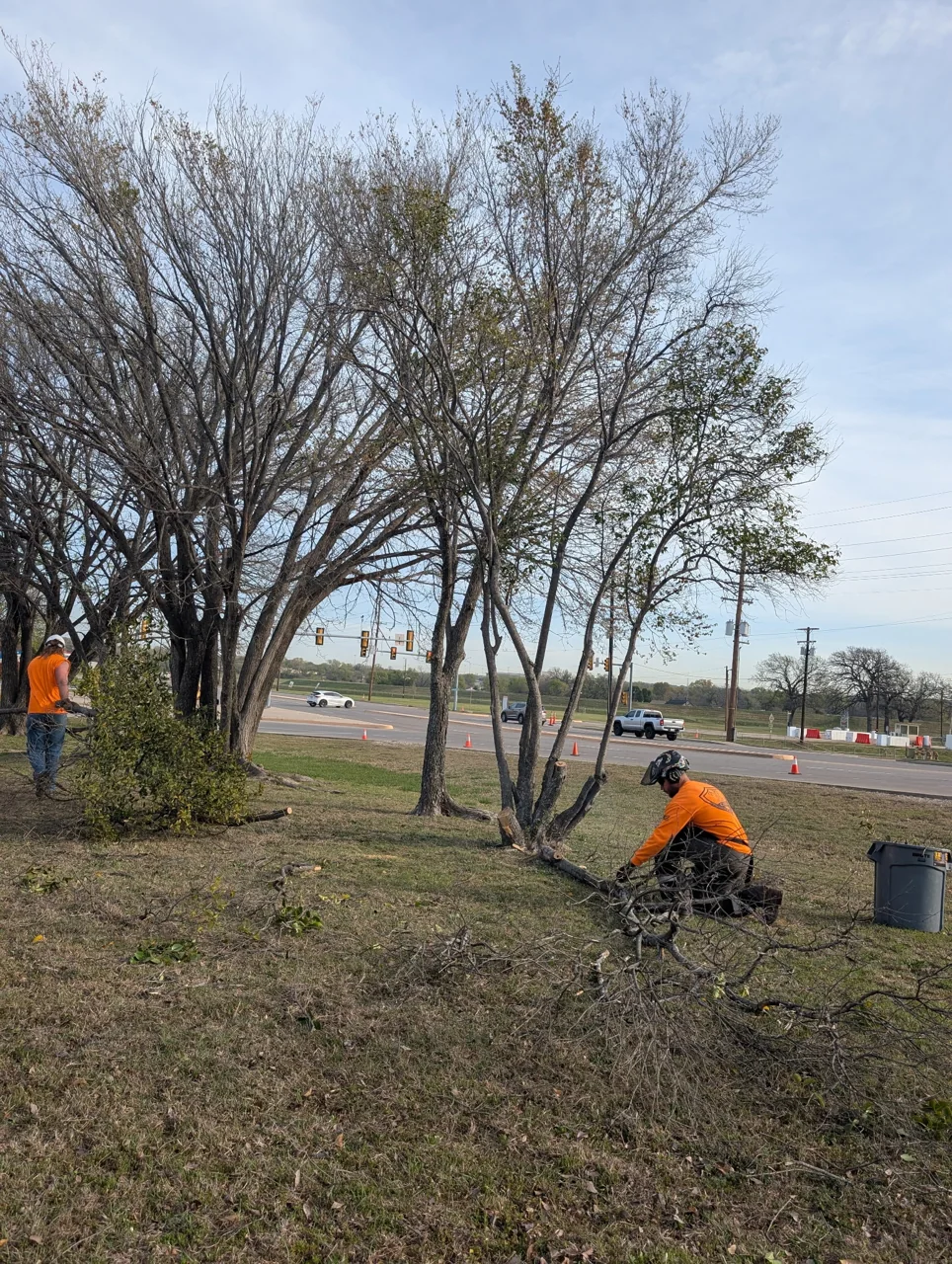
Two trees of the same size can require very different removal plans. During our estimate, we evaluate the tree's condition, nearby structures, access, drop zones, equipment requirements and how each section can be removed safely. A removal requiring additional rigging, equipment or crew members may take longer and cost more, but we don't remove those steps simply to finish the job faster. Safety—for our crew, your property and everyone around the work zone—comes first.
Crew Safety Brief & Takedown Plan
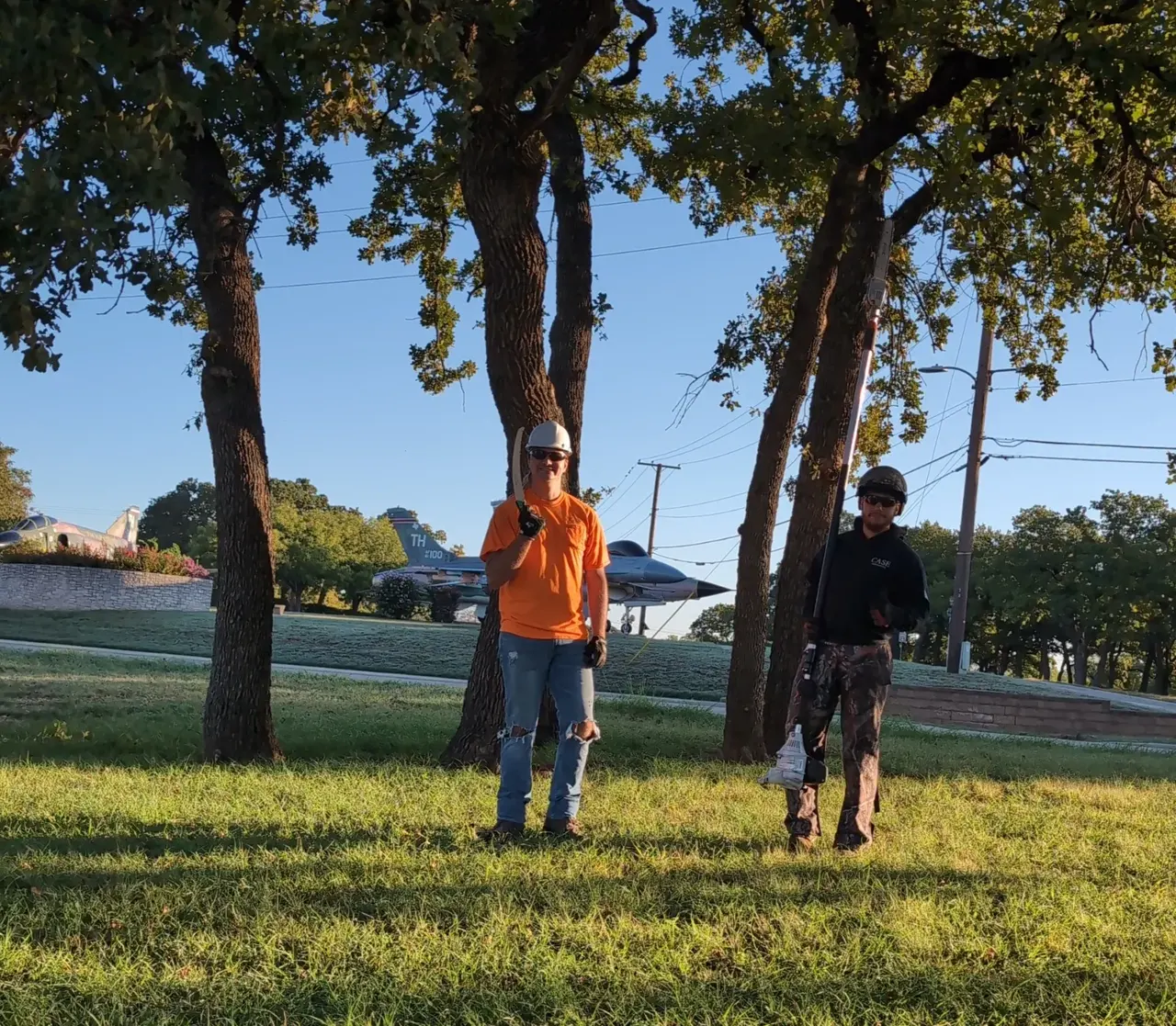
Before work begins, our crew reviews the hazards identified on the property and walks through the takedown plan together. We discuss rigging, equipment placement, drop zones, communication and each crew member's role. Everyone is encouraged to speak up if they see a hazard or a better approach. A good plan isn't dependent on one person seeing and saying everything—our crew works together to identify problems before they become problems.
"Give me six hours to chop down a tree and I will spend the first four sharpening the axe." - Often attributed to Abraham Lincoln The attribution may be uncertain, but the principle is one we believe in: preparation is part of the job. Before a tree comes down, the plan needs to go up.
We identify hazards, establish the takedown and rigging plan, position equipment, define communication between crew members and make sure everyone understands their role before work begins. Gaps in planning can become problems once a tree is in motion, and that's not something we take lightly.
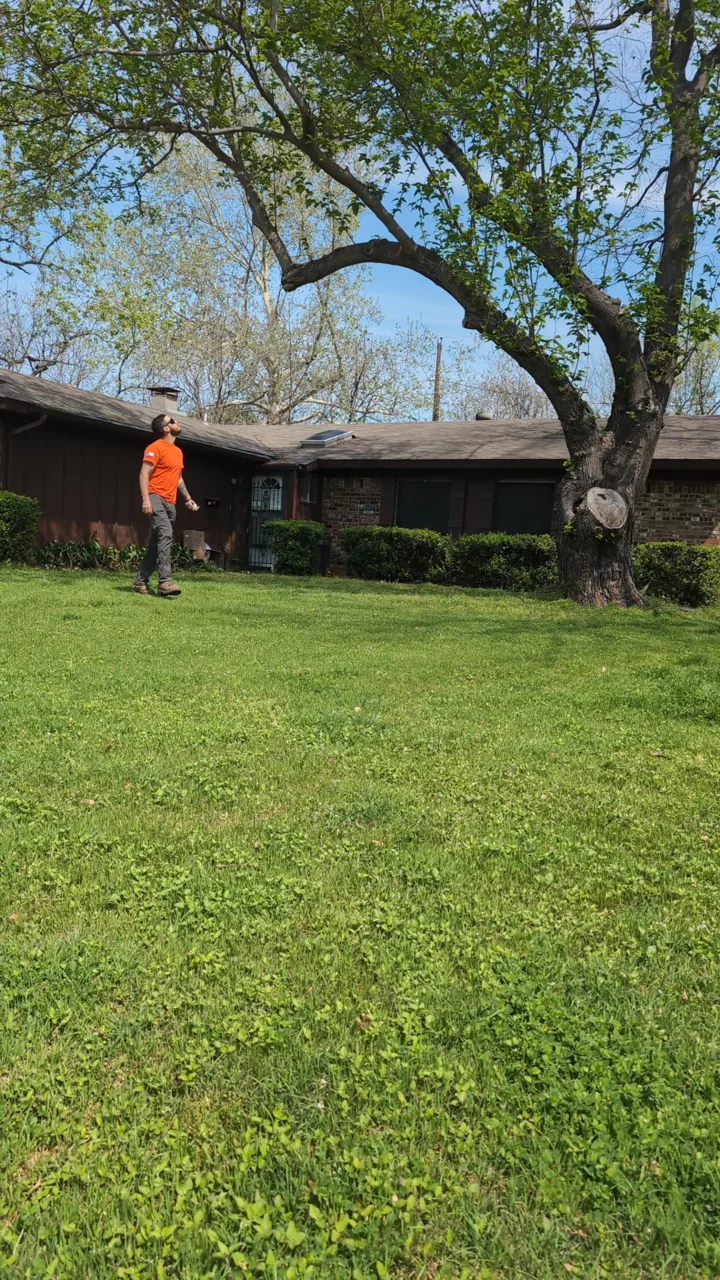
Our crew safety brief also gives every person on the job a voice. If someone sees a hazard, questions part of the plan or identifies a better approach, we stop and address it. Good tree removal isn't just about knowing how to make the cut, it's being prepared for what happens after it.
How Much Does Tree Removal Cost in Fort Worth, TX?
What goes into your estimate
- Tree size and condition
- Proximity to structures, underground utilities and irrigation
- Available drop zone
- Equipment access
- Rigging requirements
- Crew size and required skill level
- Estimated time
- Debris handling
- Stump grinding
- Estimator experience
- Whether a Certified Arborist is required
- Whether lawn damage is acceptable
- Surrounding trees and landscaping that could be damaged
Tree removal estimates can vary significantly even when contractors are looking at the same tree.
Part of that difference comes from how each company plans to complete the removal. A tree with a large open drop zone may allow for a faster approach, while a tree near a home, fence, driveway or other valuable target may be better suited for a slower, more controlled piece-by-piece removal.
That's why we encourage homeowners to look beyond the final number when comparing bids. Ask how the tree will be removed, what equipment will be used, how the property will be protected and what is included in the estimate. The lowest bid and highest bid aren't automatically the wrong or right choice—the important question is whether the proposed removal plan matches the level of control you're comfortable with around your property.
Our estimates are based on the time, crew, equipment and level of control we believe the removal requires—not simply how quickly we can get the tree on the ground.
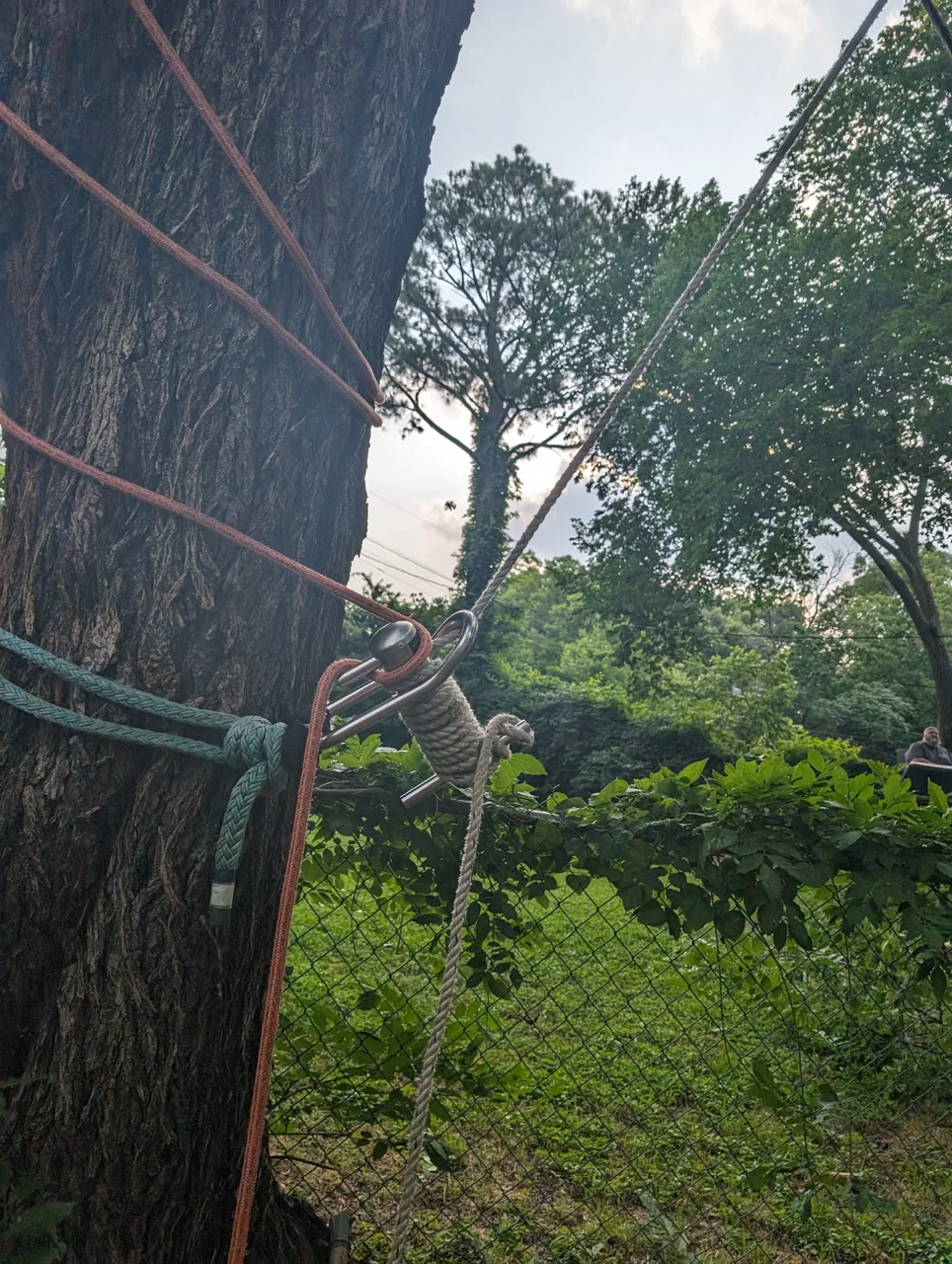
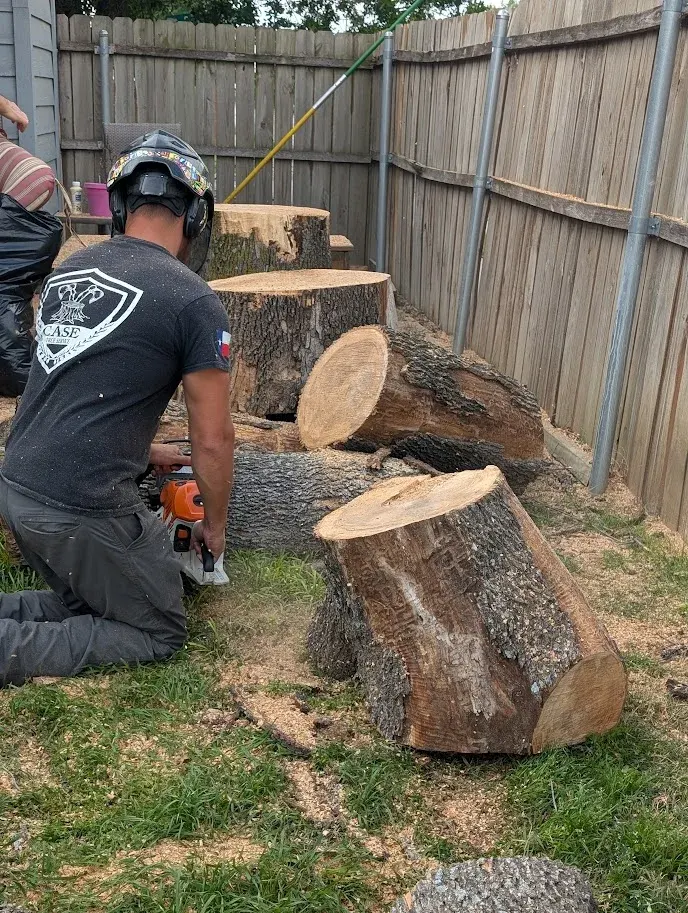
Friction-controlled devices we use to reduce weight someone needs to hold to slowly lower a log or branch. While the "real feel" weight taken off varies with rope size and load, 3 rope wraps around this device will let you be able to hold 400 LBS of wood tied on to the rope with one hand
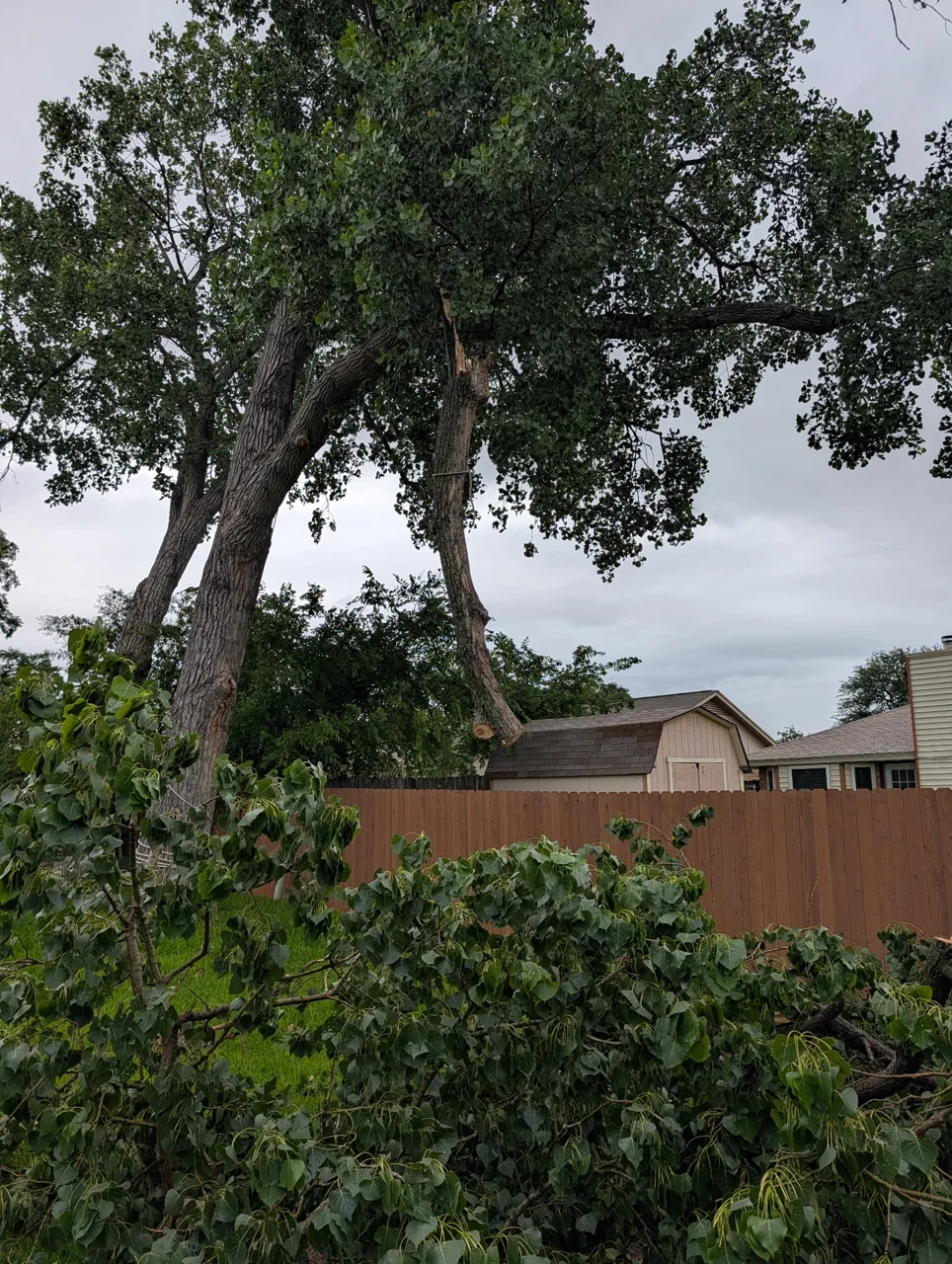
After we measured and made sure this piece of wood would clear the fence, we tied it off and cut it so that we could slowly lower it down and prevent lawn damage for this customer. Dropping the wood on branches and sticks on the ground could've caused them to get buried and break off below the surface.
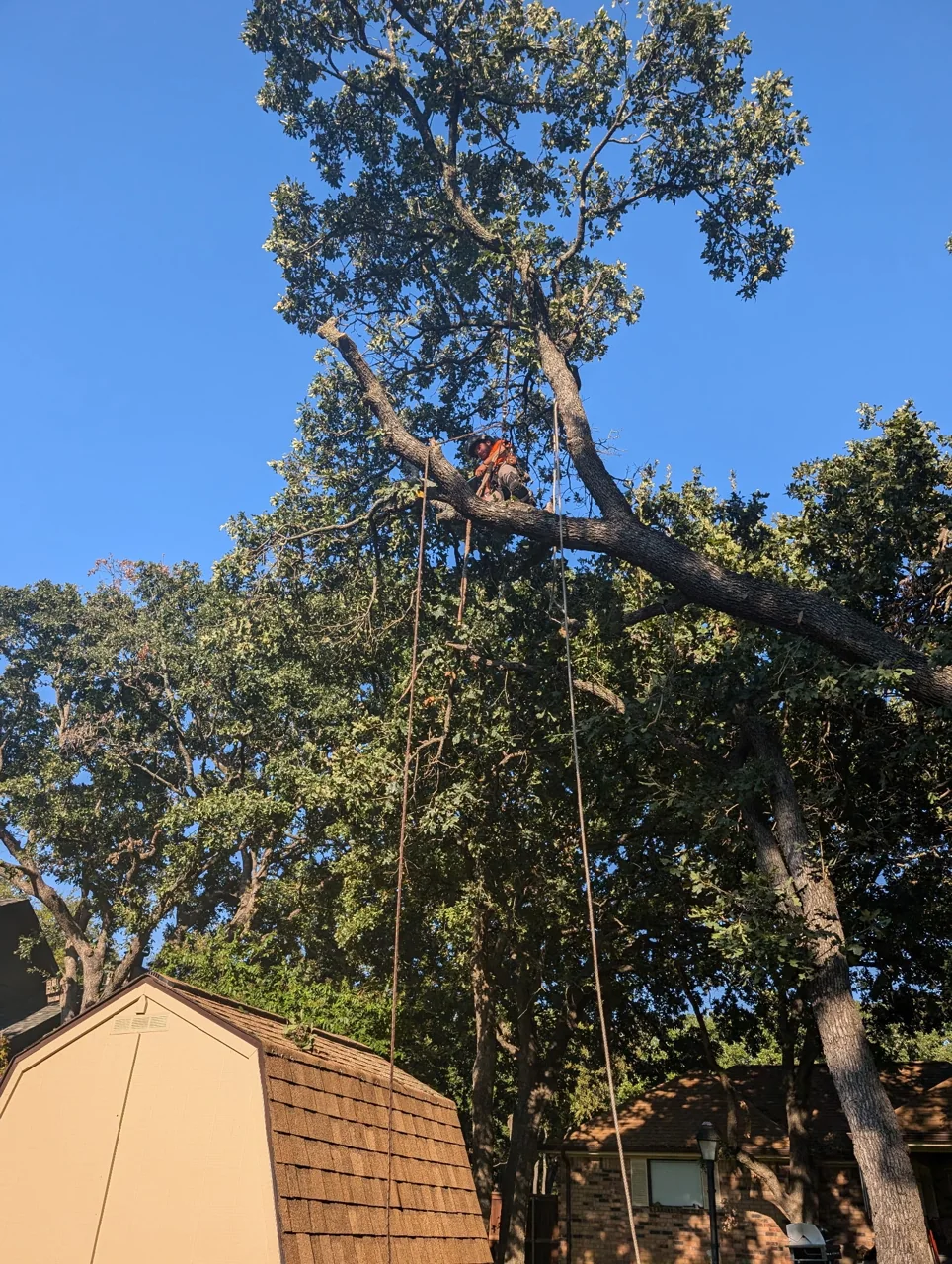
We estimate each piece’s weight, check clearance, and account for shock loading before selecting the rope and rigging point.
Controlled rigging takes more time, but helps protect nearby structures and landscaping. We choose the setup to fit the tree and property.
Recent Tree Removal Projects
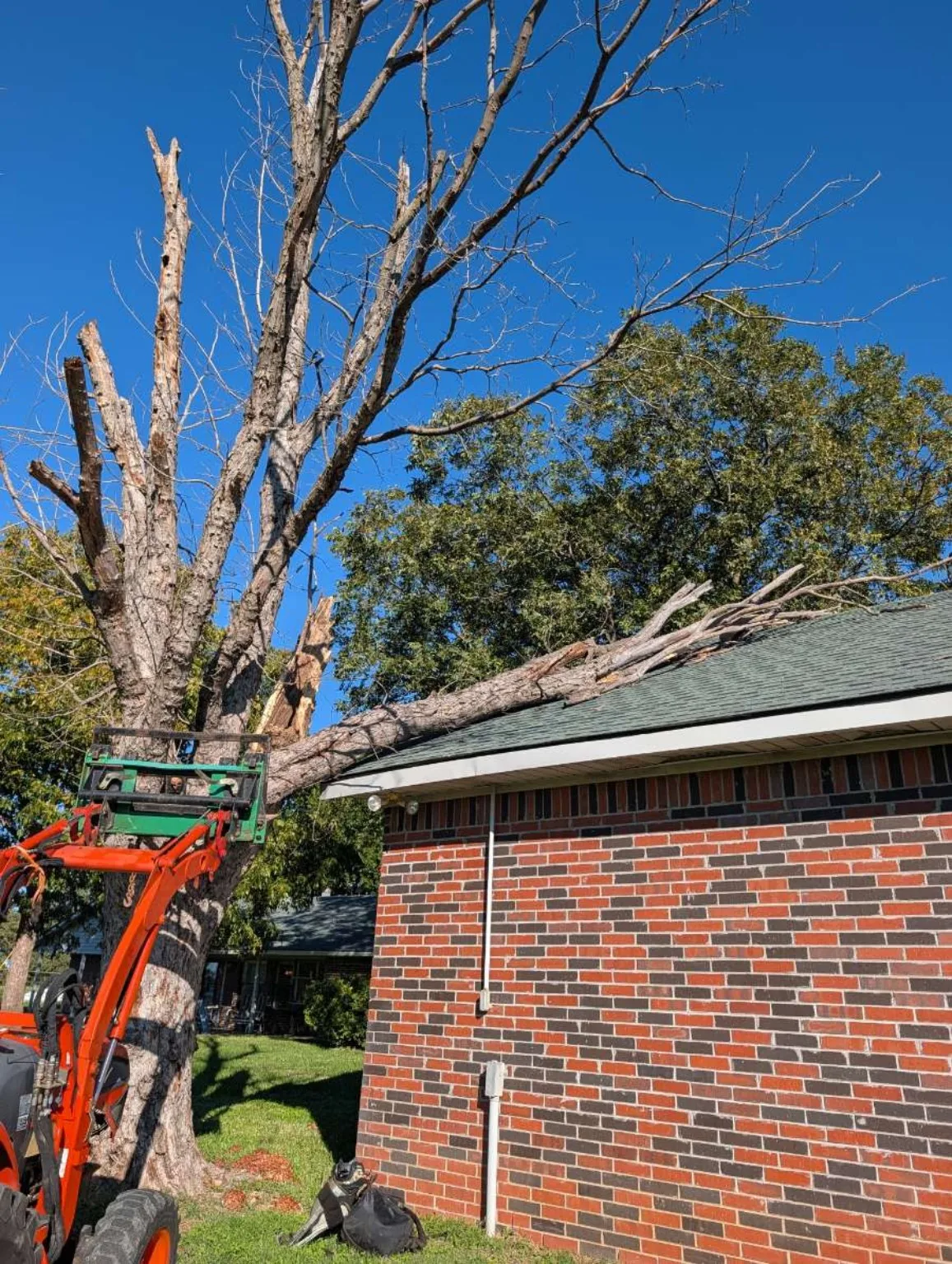
Storm-damaged maple removal
Removal beside a ranch garage and fence with Yard Sharks, plus on-site debris handling.
View project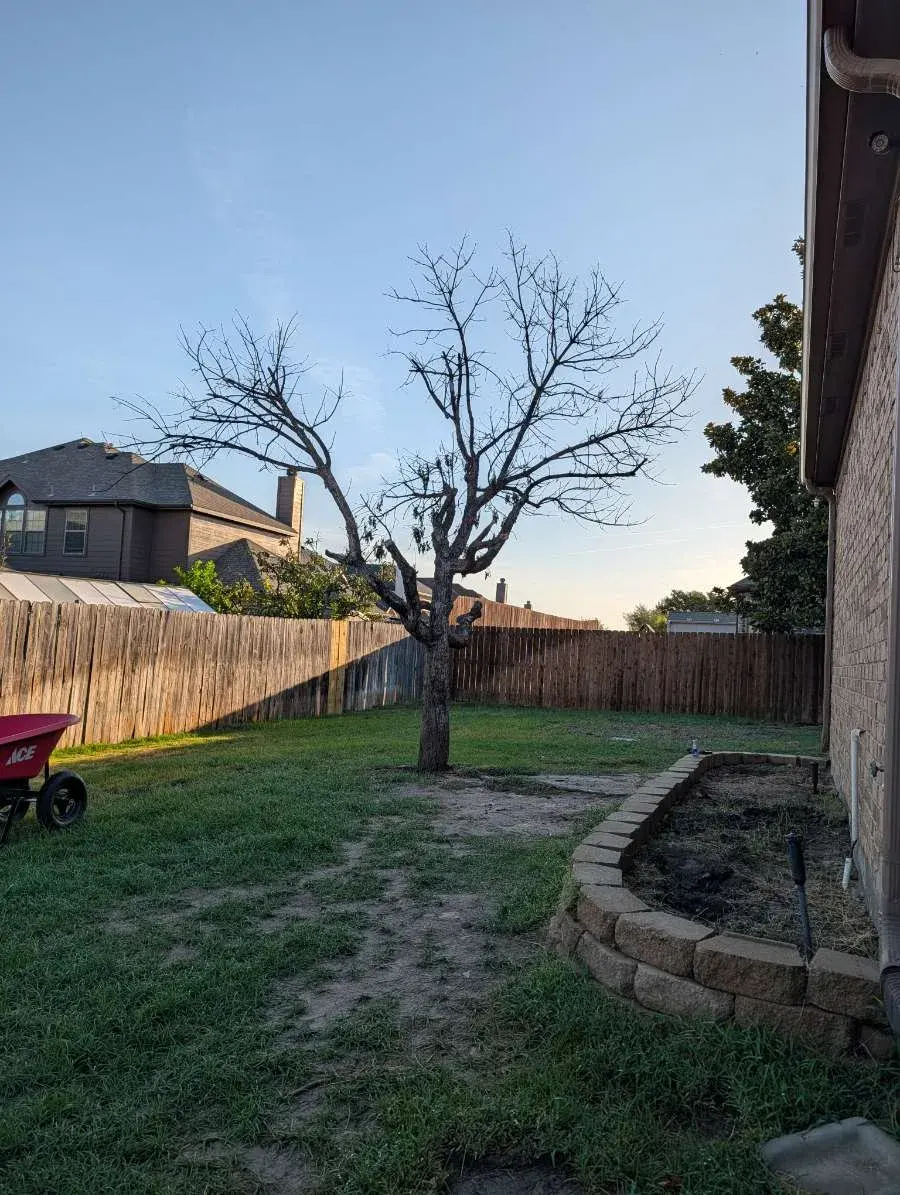
Chinese pistache removal
Backyard removal, stump grinding, and cleanup near Eagle Mountain Lake.
View project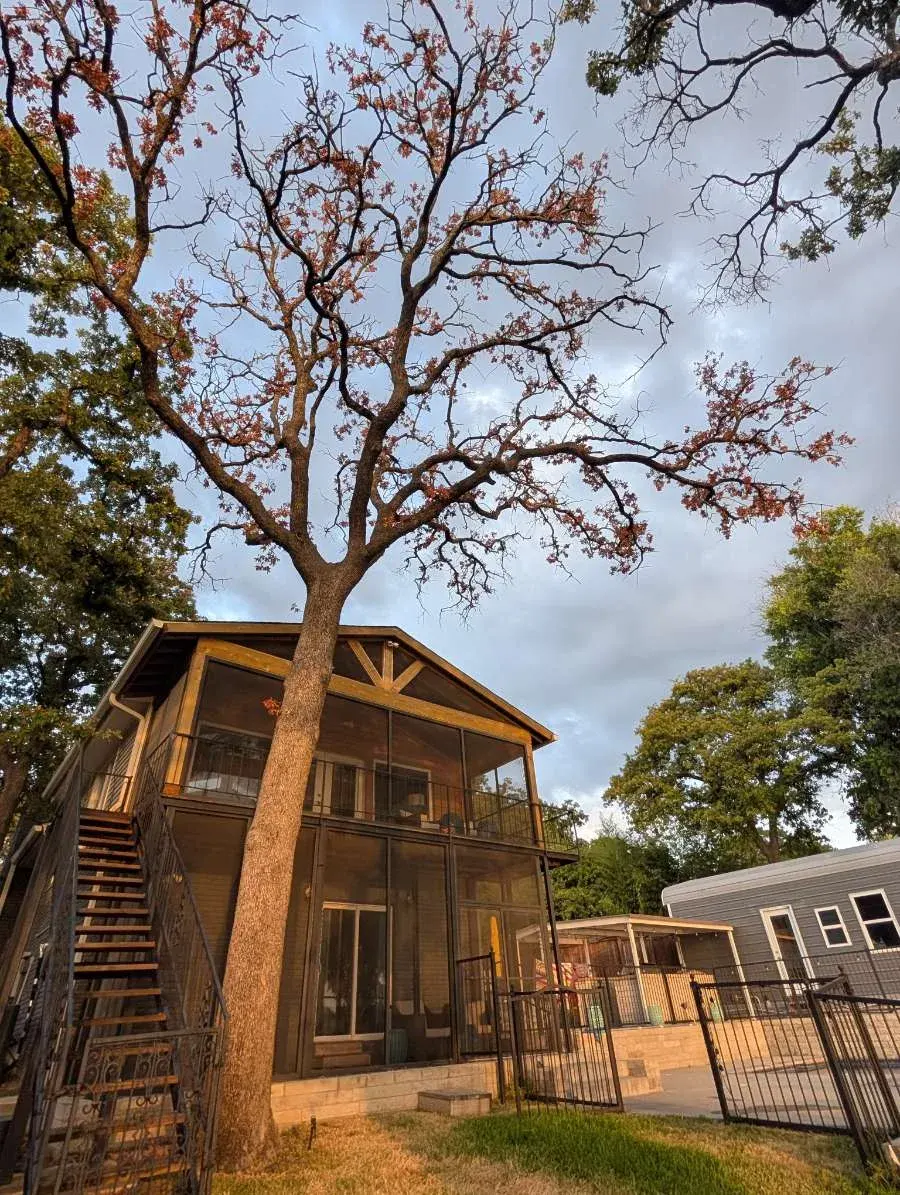
Post oak removal
Controlled removal of a declining post oak, with careful property protection.
View project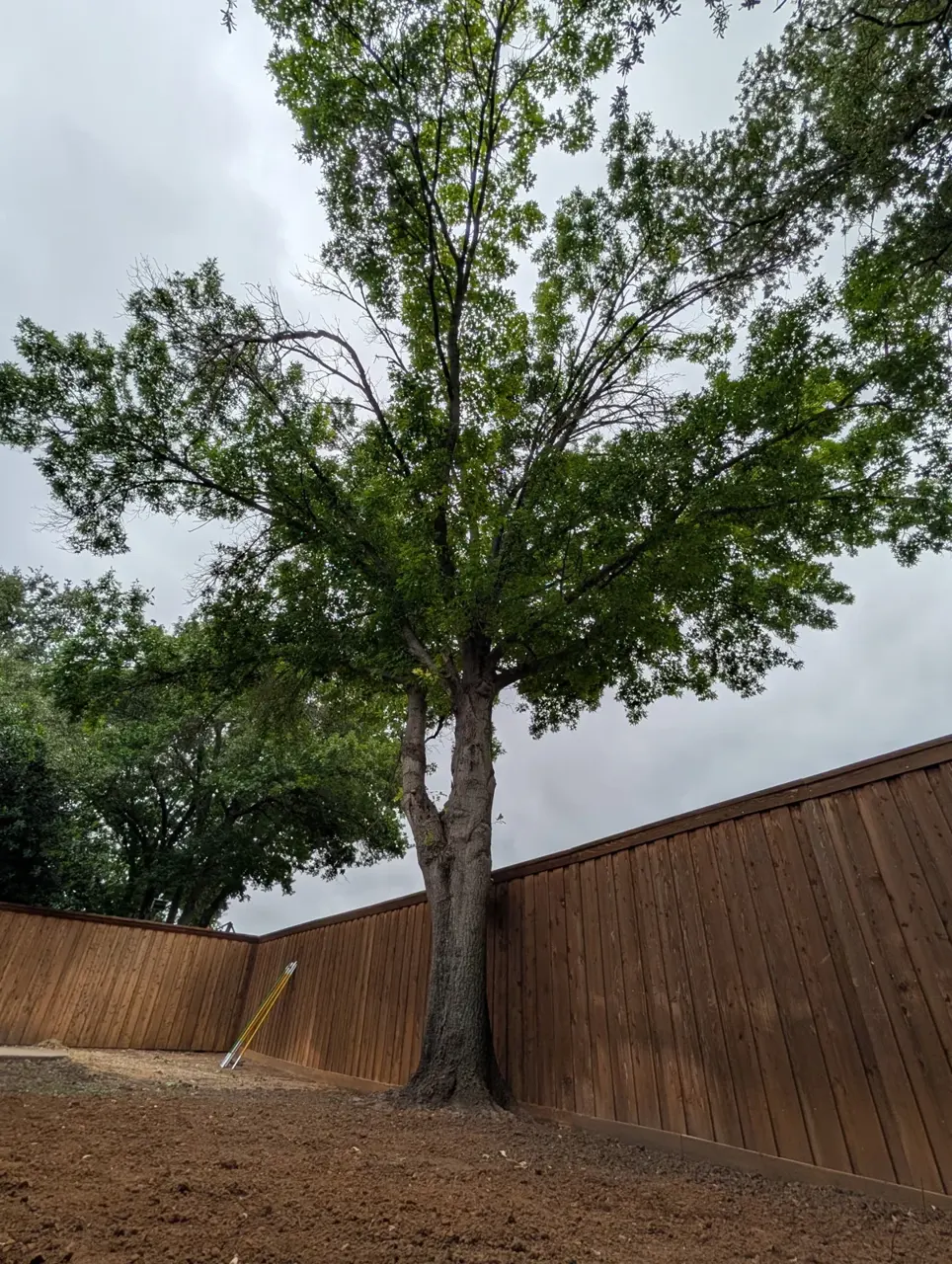
Large red oak removal
Careful removal beside a fence and property line, followed by stump grinding.
View project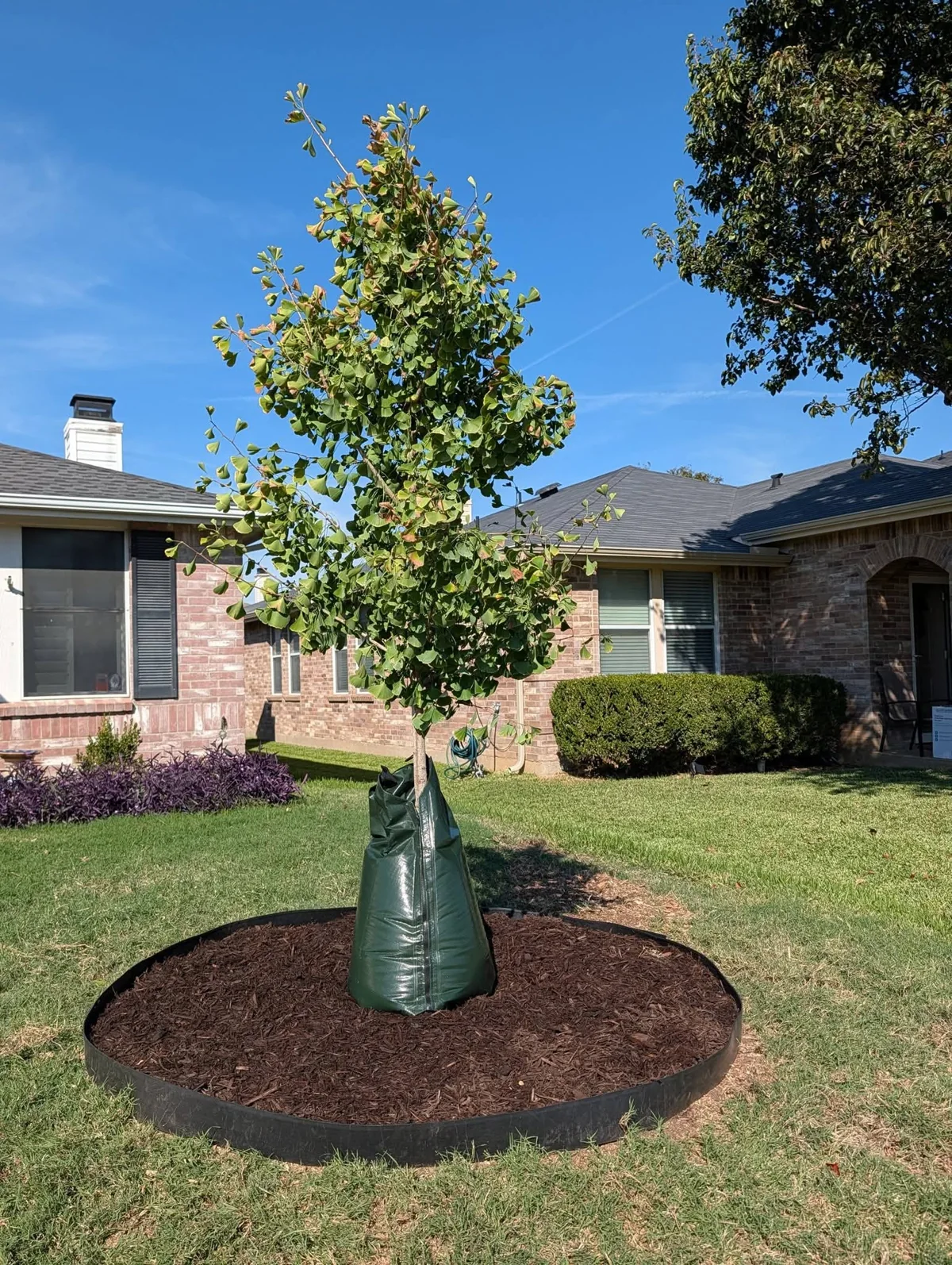
Maple to golden ginkgo
Old maple removal and a fresh start with a Presidential Gold ginkgo.
View projectSwipe to explore projects →
Frequently Asked Tree Removal Questions
Do you remove trees near homes, fences, power lines, or other structures?
Yes. Trees in confined areas may require controlled rigging, specialized equipment, or removal in smaller sections. We evaluate surrounding structures, access, drop zones, and other hazards before determining the removal plan.
Is stump grinding included with tree removal?
Stump grinding can be included with your tree removal estimate or completed separately. We’ll discuss the desired grinding depth, cleanup, and what you plan to do with the area afterward so the finished result fits your property.
Do you provide emergency tree removal?
Yes. Case Tree Service provides 24/7 emergency tree services for storm-damaged trees, failed trees, broken limbs, and other urgent tree hazards. We assess the situation first and develop a safe approach based on the conditions on site.
Will an ISA Certified Arborist be on site during my tree removal?
Yes. An ISA Certified Arborist is on site for our tree removal work, not simply involved in providing the estimate. This allows hazards, tree condition, and changing job-site conditions to be evaluated throughout the removal.
What happens to the wood and debris after a tree is removed?
Our removal process includes job-site cleanup and debris handling based on what was discussed in your estimate. If you'd like to keep firewood or other usable wood from the tree, let us know beforehand so we can plan accordingly.