From an old maple to a new beginning
This Fort Worth project brought together tree removal, stump grinding, thoughtful tree selection, and a complete planting installation. We removed the old maple, ground its stump thoroughly, prepared a wide planting area at the correct depth, and installed a male Presidential Gold® ginkgo.
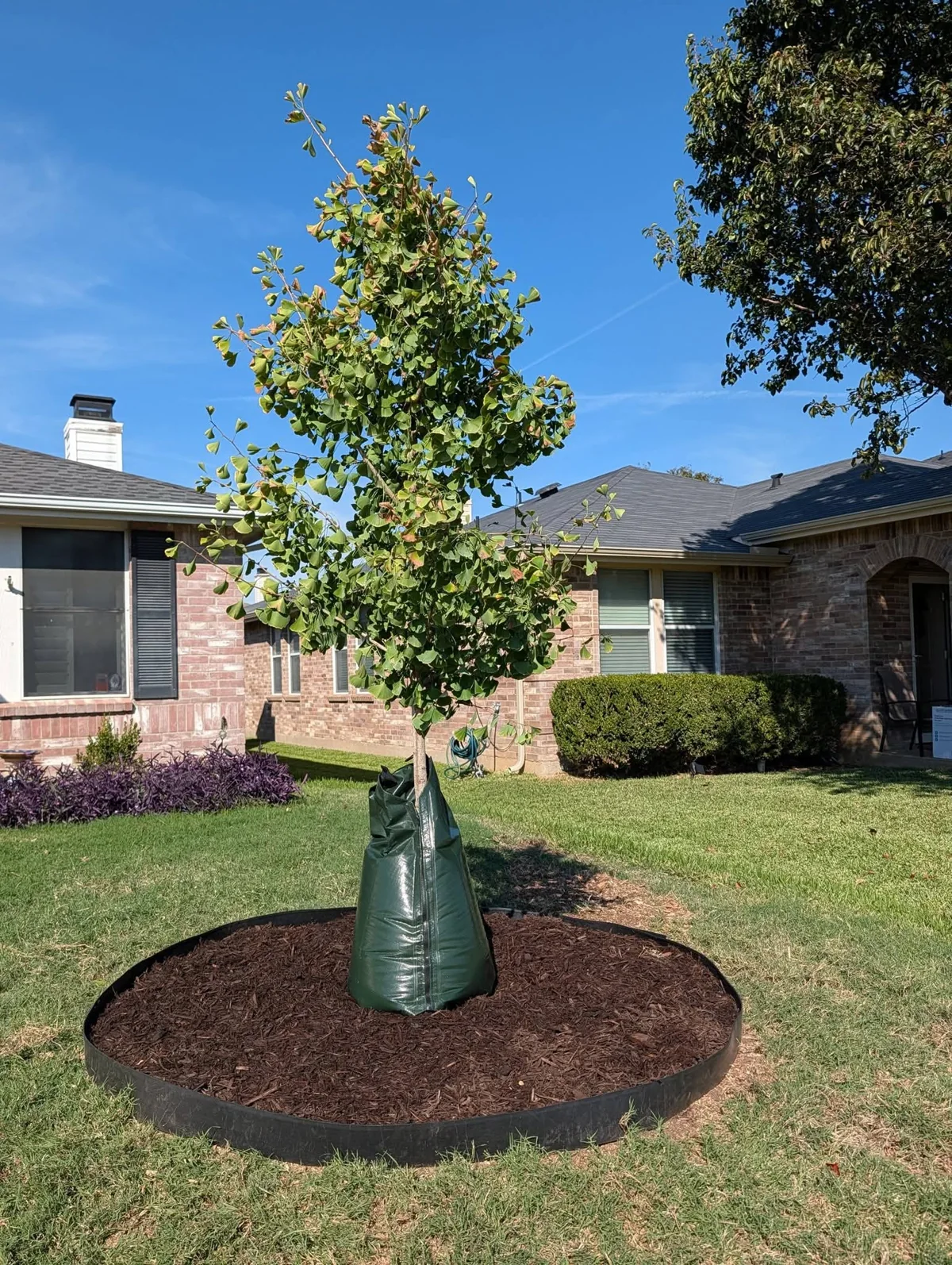
The finished installation included a six-foot-diameter mulch ring approximately three inches deep, landscape edging, a slow-release watering bag, root stimulant, and a mycorrhizal root additive.
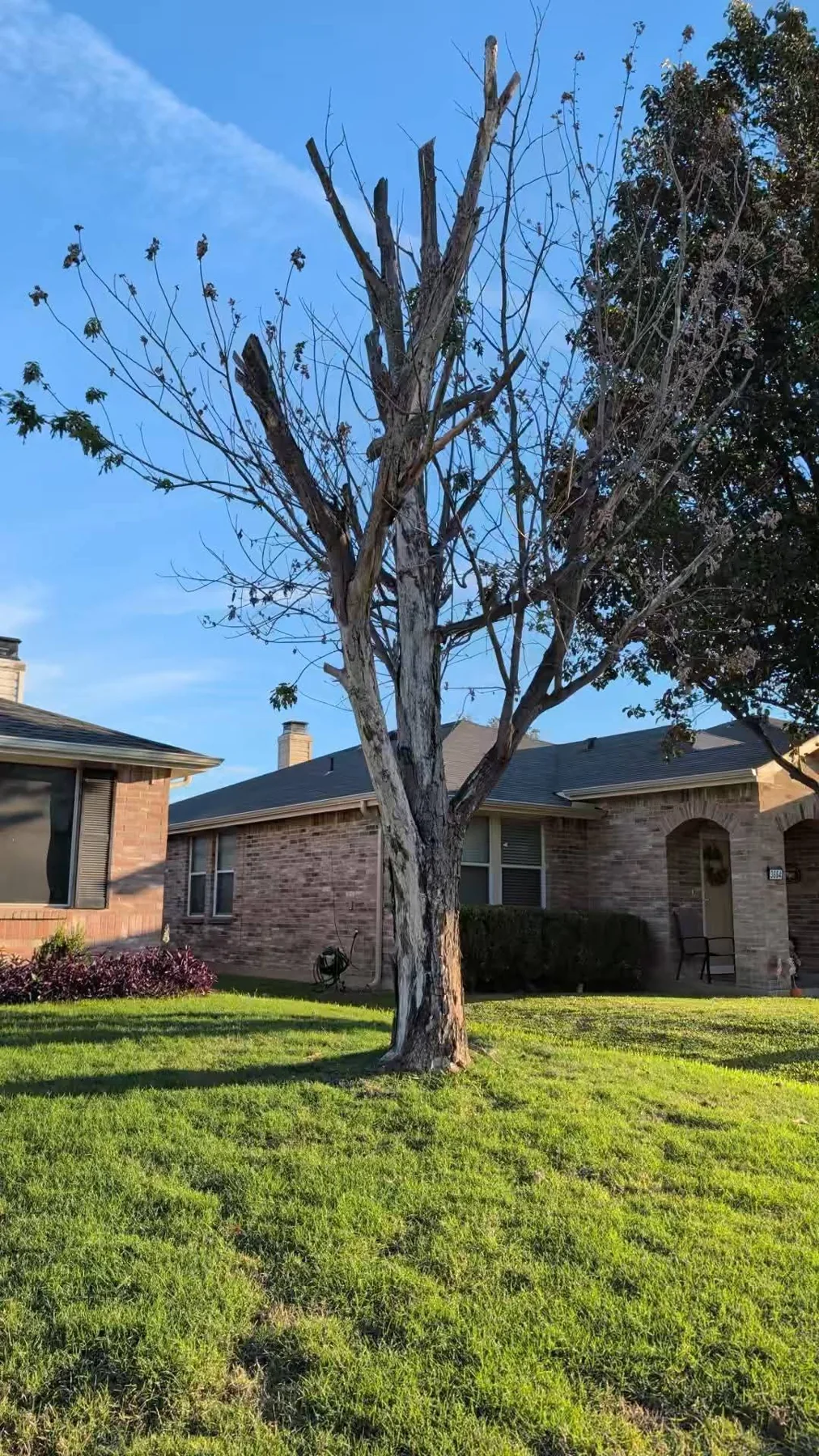
1. Remove the old tree and grind the stump
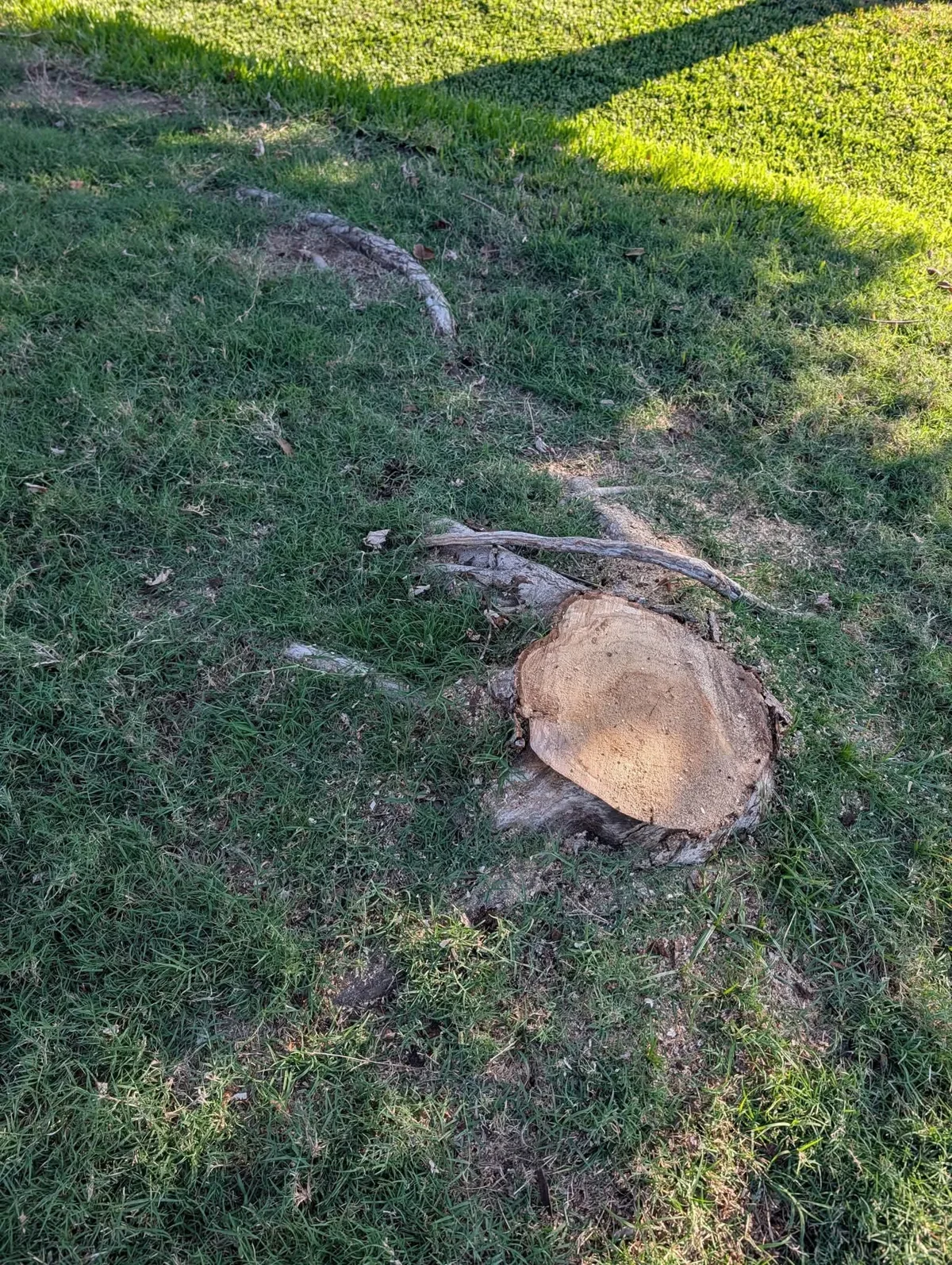
We removed the maple and ground the remaining stump completely as part of the replacement project. The stump photo shows the site after the tree was cut down and before grinding—not the finished result.
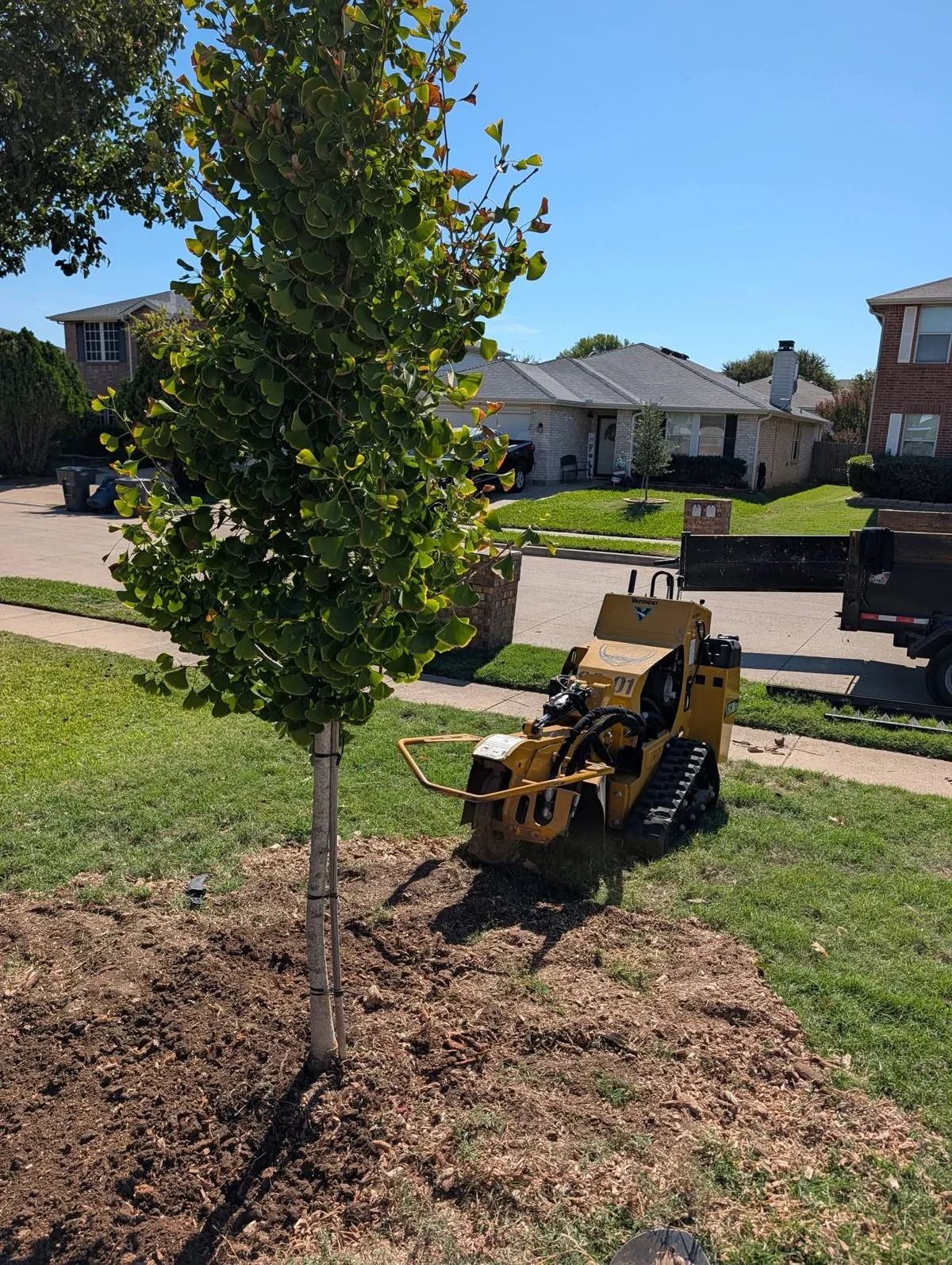
2. Make room for roots, dig the correct depth hole
We dug a broad planting area and set the new ginkgo at the correct depth. Planting depth is based on the tree’s root flare and uppermost structural roots, rather than simply copying the nursery soil line.
Why this matters: a wide hole gives roots room to grow into the surrounding soil. Digging too deep can leave the root flare buried or allow the root ball to settle. Correct depth and a stable base support a healthier start.
3. Choose a tree that fits the property
For this replacement, we installed Ginkgo biloba ‘The President’, sold as Presidential Gold® ginkgo. This male selection is known for its upright form and golden fall foliage. Choosing a male ginkgo avoids the fleshy, strong-smelling seeds associated with female trees; it will still shed its leaves in autumn.
Why this matters: selecting a tree involves more than its appearance on planting day. Mature size, available root space, drainage, sun exposure, nearby structures, and the homeowner’s maintenance preferences all belong in the decision.
A living link to the dinosaur era
Ginkgo has an extraordinary family history: fossils of ginkgo leaves date back more than 200 million years. Its lineage was around during the age of dinosaurs, long before today’s neighborhoods existed.
The Presidential Gold cultivar is a modern selection—not a 200-million-year-old cultivar—but its ancestry makes it a memorable addition to a landscape.
4. More than a pretty face
We finished this planting with a mulch ring six feet in diameter and approximately three inches deep. Landscape edging helps contain the mulch and gives the installation a defined appearance.
Why mulch matters: organic mulch helps slow moisture loss, moderate soil temperatures, and reduce competition from turf and weeds. Over time it also contributes organic matter as it breaks down. Keep mulch back from the trunk and root flare rather than piling it into a mound against the bark.
5. Slow, measured watering during establishment
We installed a watering bag to release water slowly and make the amount applied easier to track. The aim is to wet the root ball and support establishment without relying on a quick surface spray.
Why this matters: newly planted trees initially depend on a relatively small root system. Slow application can help water soak in, but a bag is not an automatic watering schedule. Check soil moisture, drainage, recent rainfall, and weather, then adjust the amount and frequency. Avoid keeping the root zone constantly saturated.
A tree should complement your lifestyle
Want summer shade near a window, seasonal color, more privacy, or a tree that suits the space without creating unwanted maintenance? Those goals help guide the right choice.
Ask us which trees could complement your lifestyle—not get in the way of it. We’ll talk through how you use the property, what you want from the tree, and what the site can support as it matures.
Considering a replacement after removal? Explore our tree selection and planting services.