Long-standing ash dieback, addressed with selective pruning
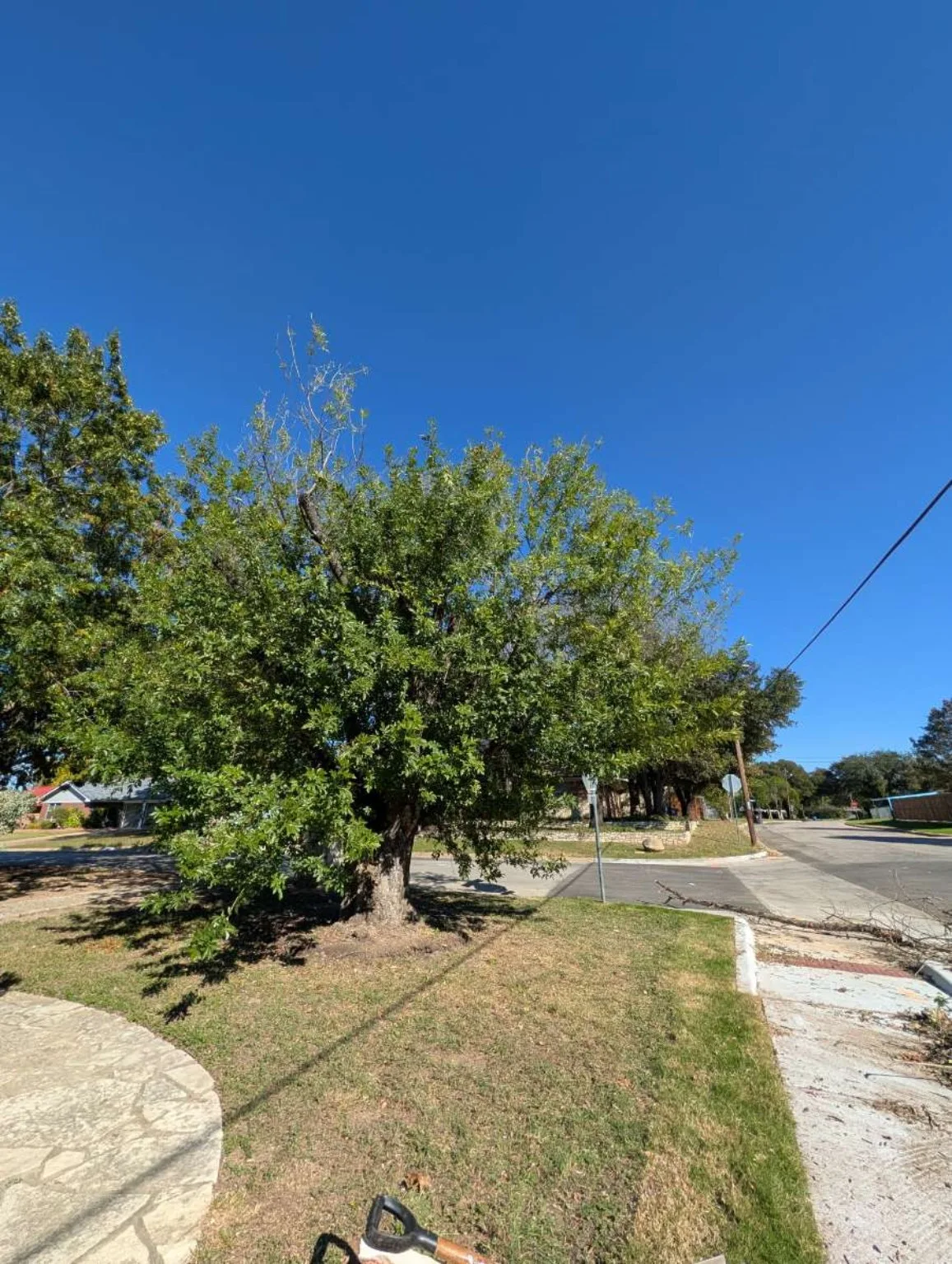
This Lake Worth project focused on an ash with extensive deadwood throughout its upper canopy. The dead upper crown had looked much the same for at least a year, while living sprouts and smaller lateral branches remained below it. Those dead sections presented a falling-branch hazard around the property.
Our work included deadwood removal throughout the canopy and reducing the dead upper sections back to living growth. We also cleared branches around a light post and removed large deadwood above the home’s service cable.
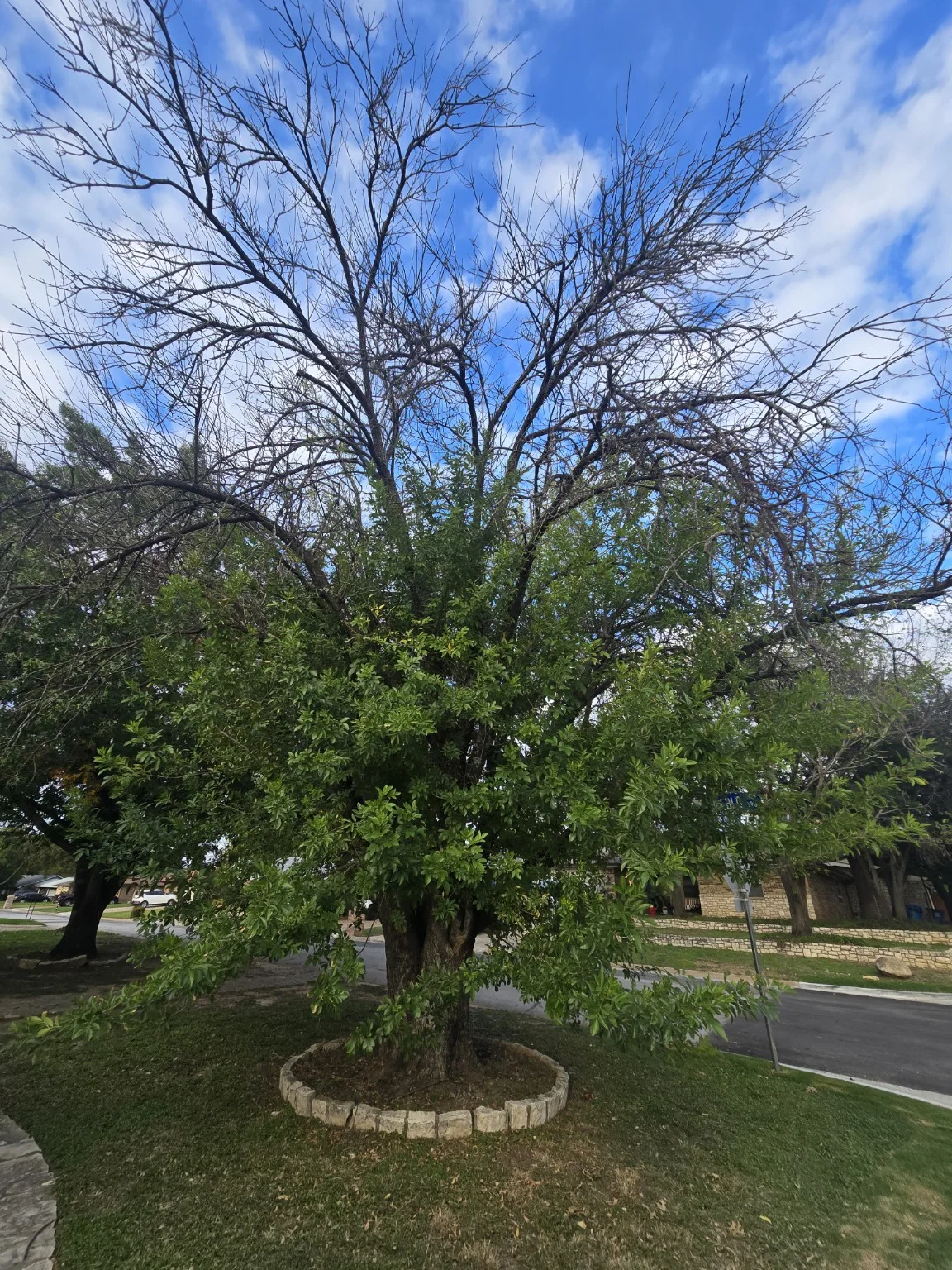
Before: a dead upper crown above living growth
The ash still had substantial green growth beneath its dead upper framework. The pruning plan focused on the hazardous dead portions while retaining living branches and foliage.
The ash’s dieback was related to environmental stress. The homeowner wanted to retain the tree if it did not have emerald ash borer (EAB), but wanted it removed if signs of EAB were found.
No visible signs of EAB were observed during our inspection. With that finding and the homeowner’s preference to keep the ash, we proceeded with removing the hazardous deadwood while retaining living growth.
ⓘ What is EAB?
Emerald ash borer is an invasive beetle whose larvae feed beneath ash bark. Clues include small D-shaped exit holes, winding galleries beneath bark, and bark splitting. Crown dieback alone does not confirm EAB, and an early infestation can have few outward signs.
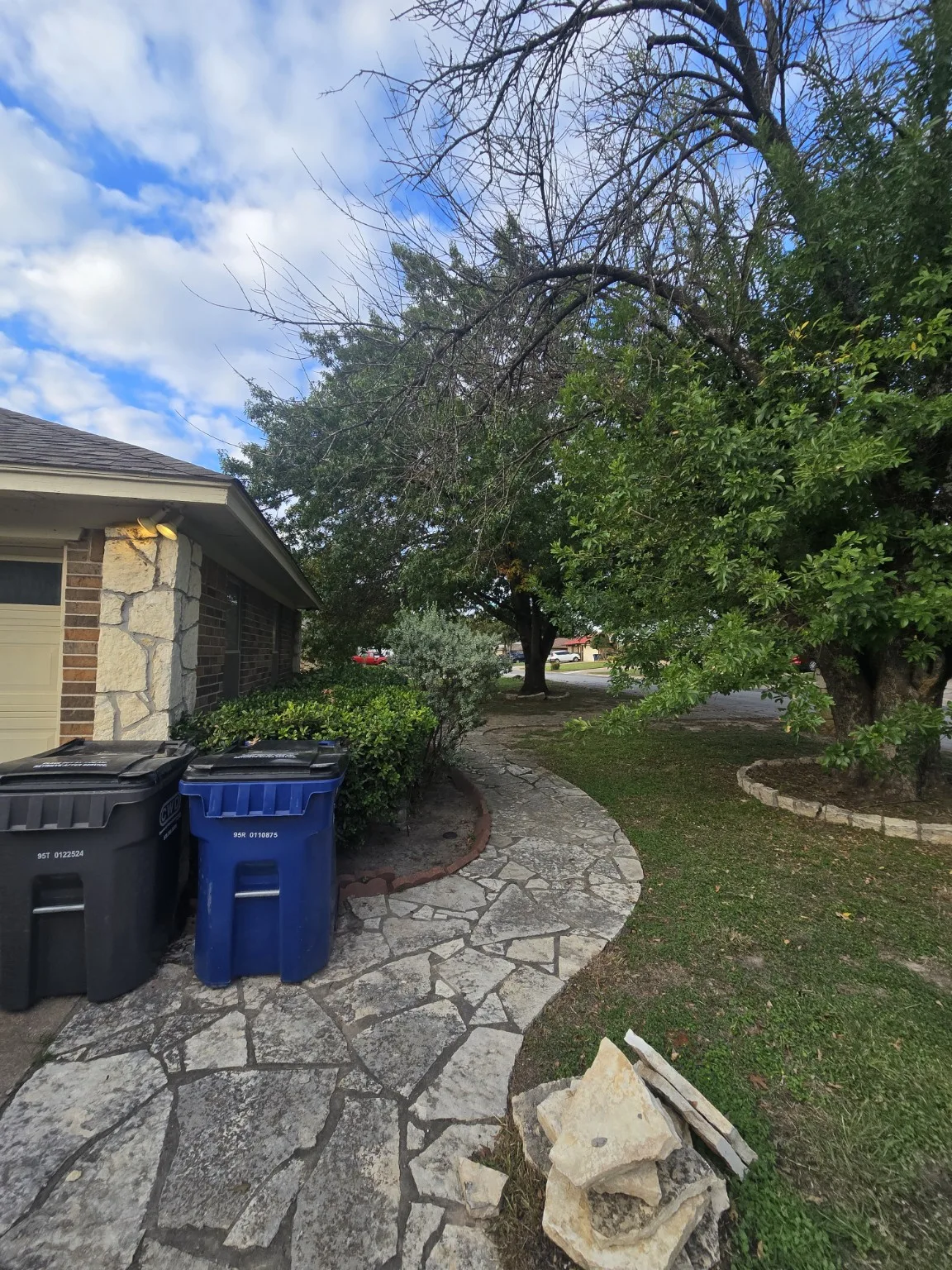
A wider view before pruning
From the driveway, the extent of the dead upper canopy was clear. The work addressed this existing deadwood while keeping the tree’s remaining living canopy.
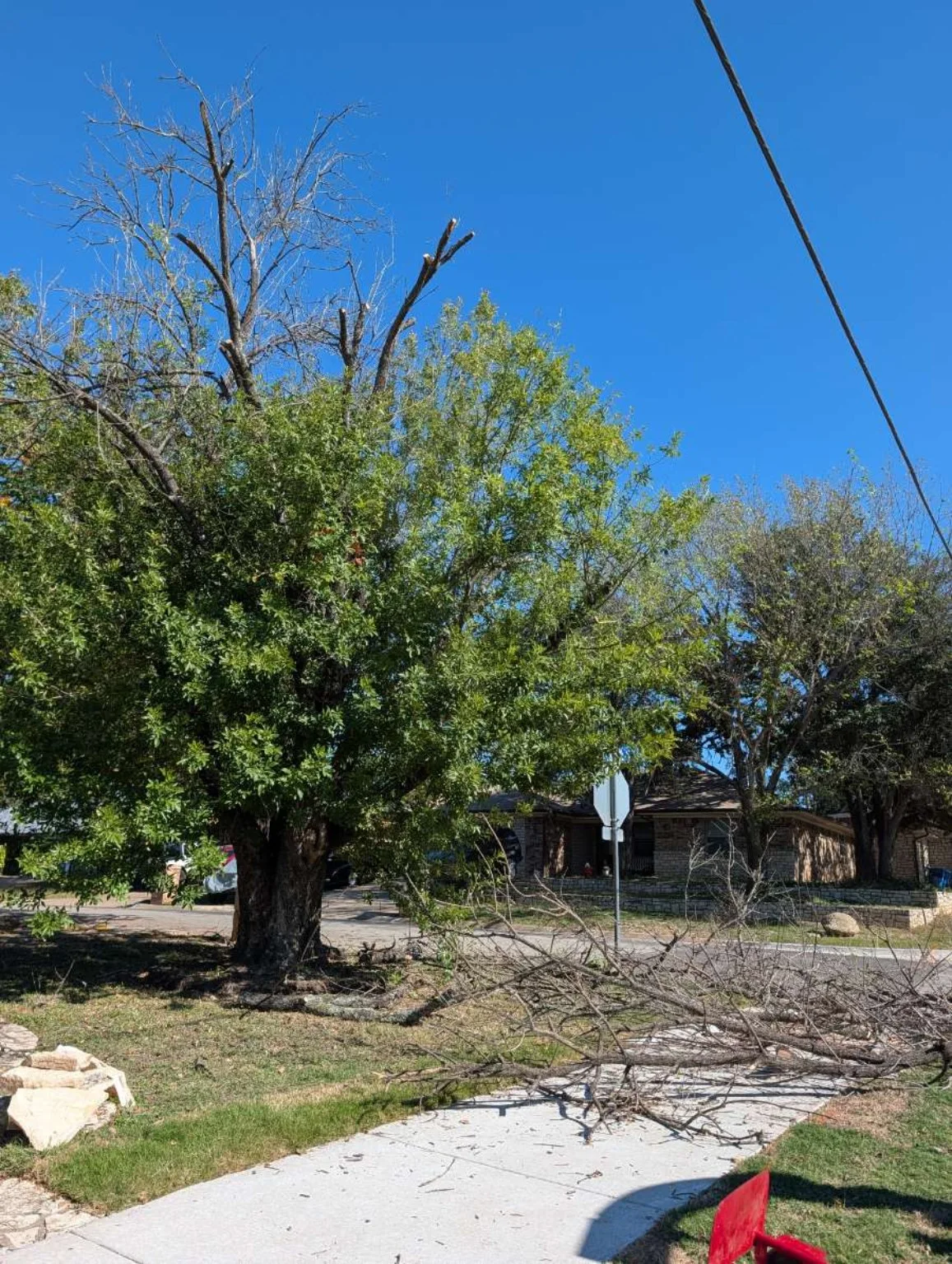
Reducing dead upper sections back to green
We worked through the canopy to remove deadwood and shorten the dead upper sections back to remaining living growth. The progress photograph shows removed material before the ash work was finished.
The aim was to reduce the hazard from the existing dead branches. Pruning does not reverse the original dieback or guarantee the tree’s recovery; the retained ash will need continued monitoring.
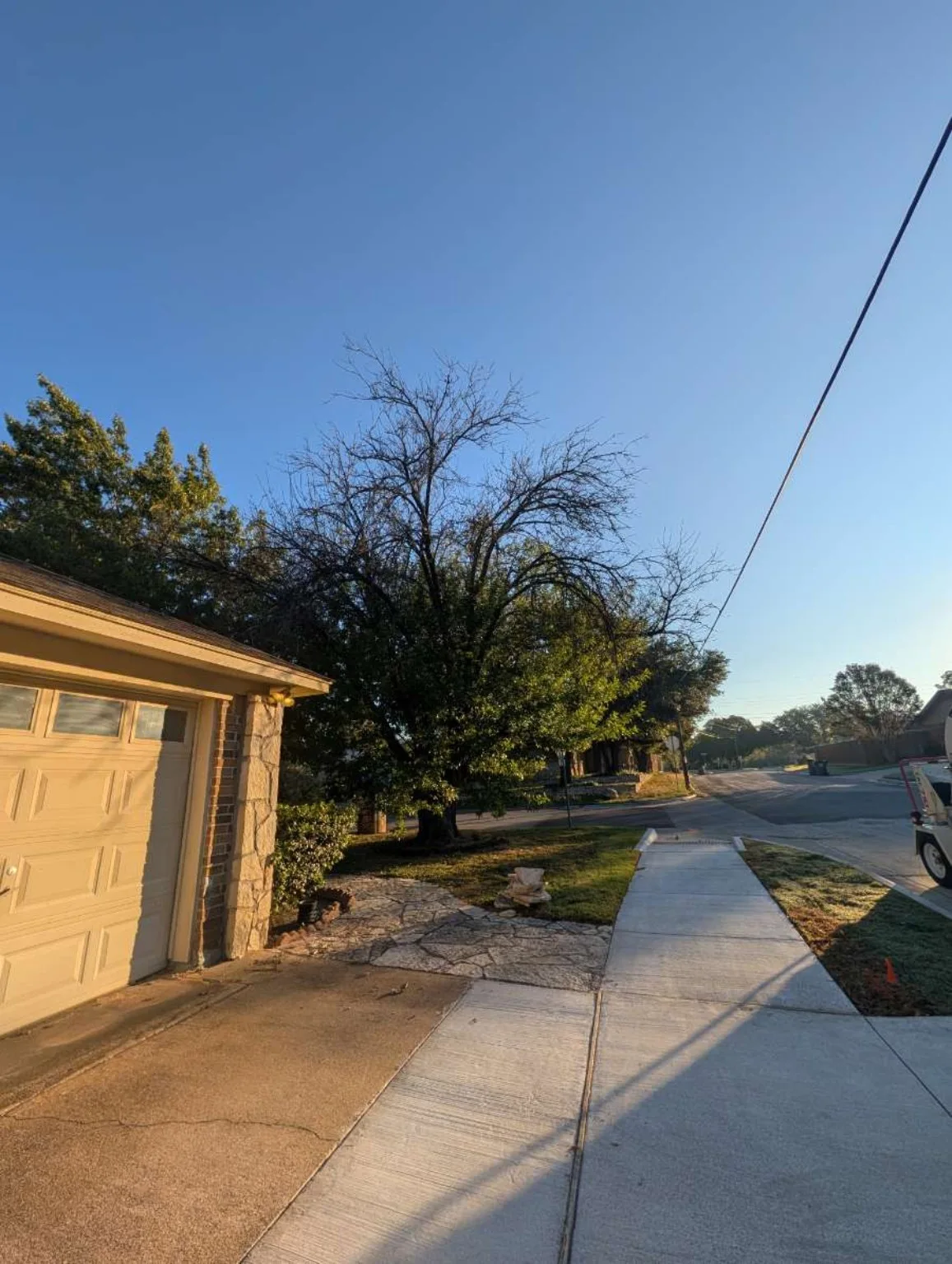
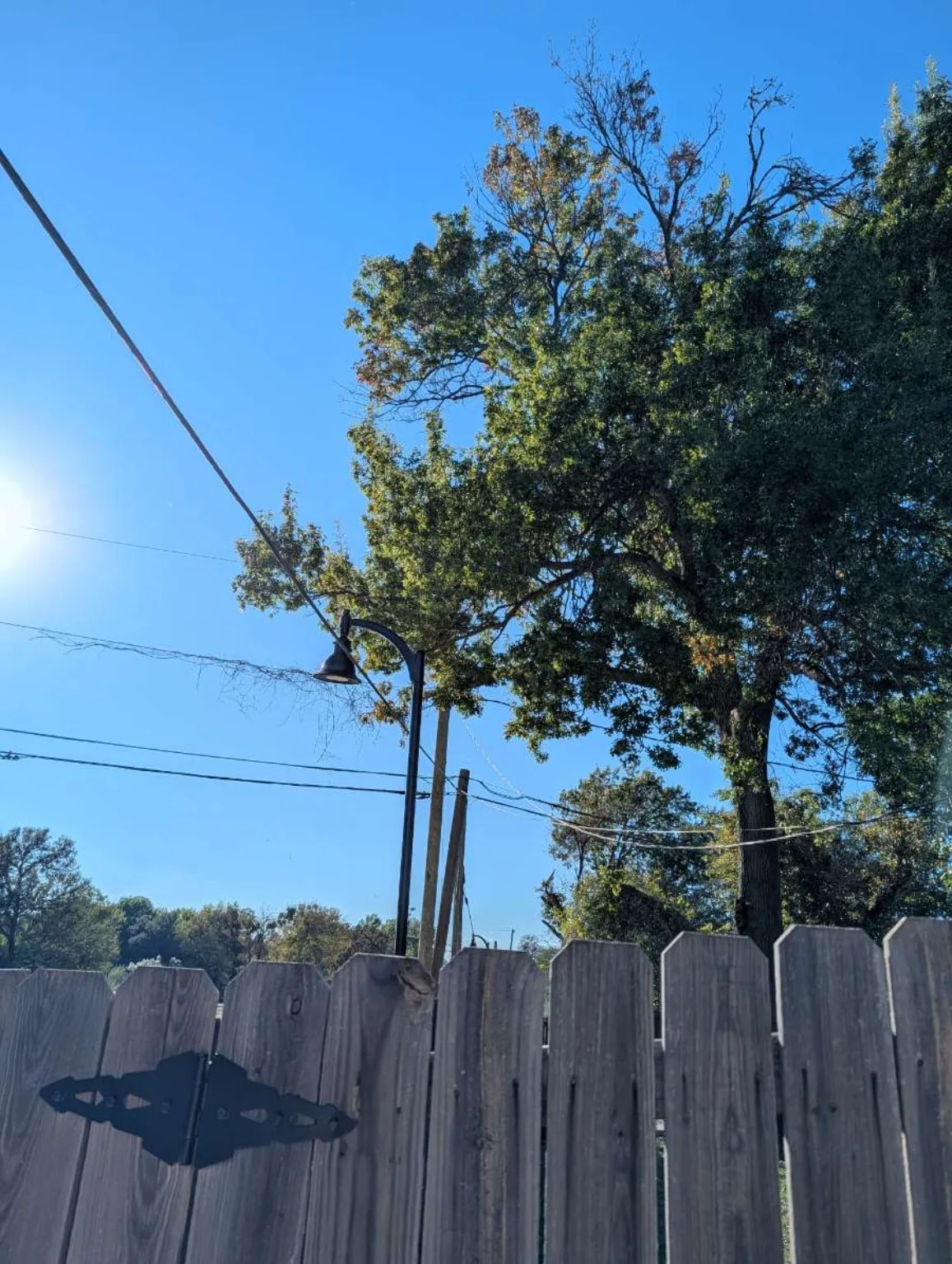
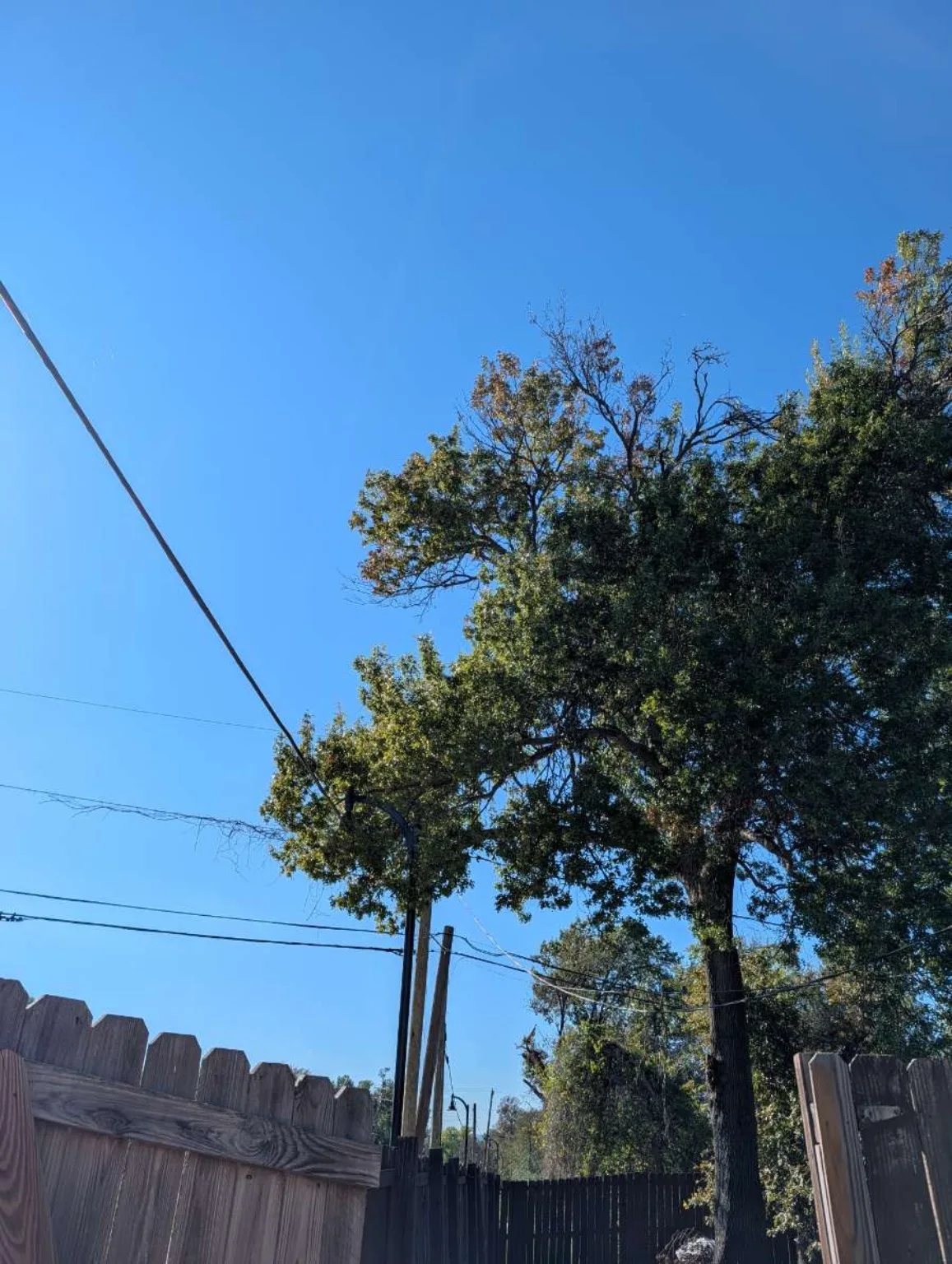
Light-post clearance and deadwood above the service cable
Elsewhere on the property, we pruned branches to open space around the light fixture. These photographs show the change around the light post.
The project also included removing large deadwood above the home’s service cable, addressing another area where falling limbs were a concern.
Tree pruning in Lake Worth
Have dead branches or clearance concerns on your property? Learn about our tree trimming and pruning services, see more past pruning projects, or request an assessment from ISA Certified Arborist Scott Case.