A closer look at an oak in Azle
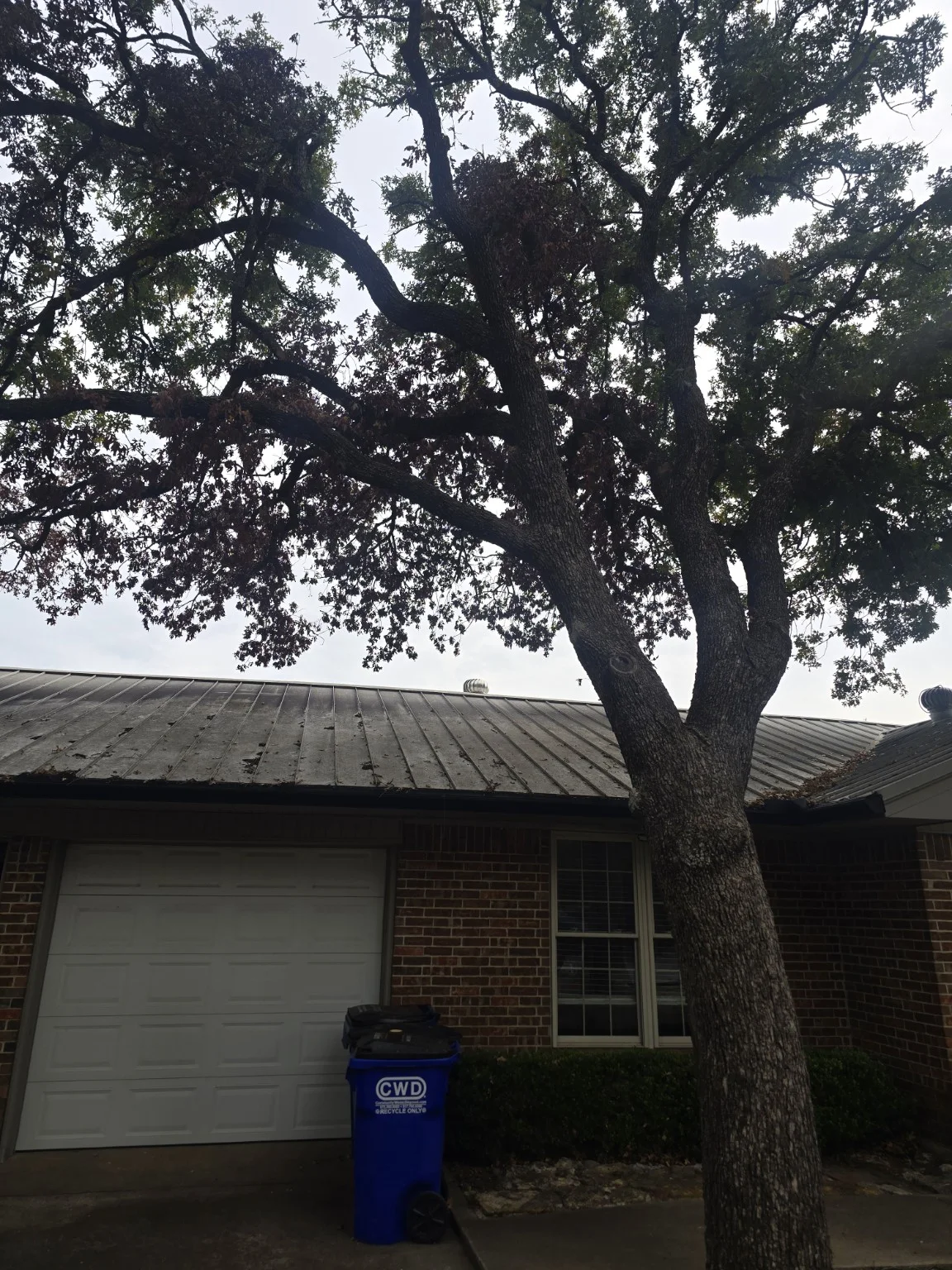
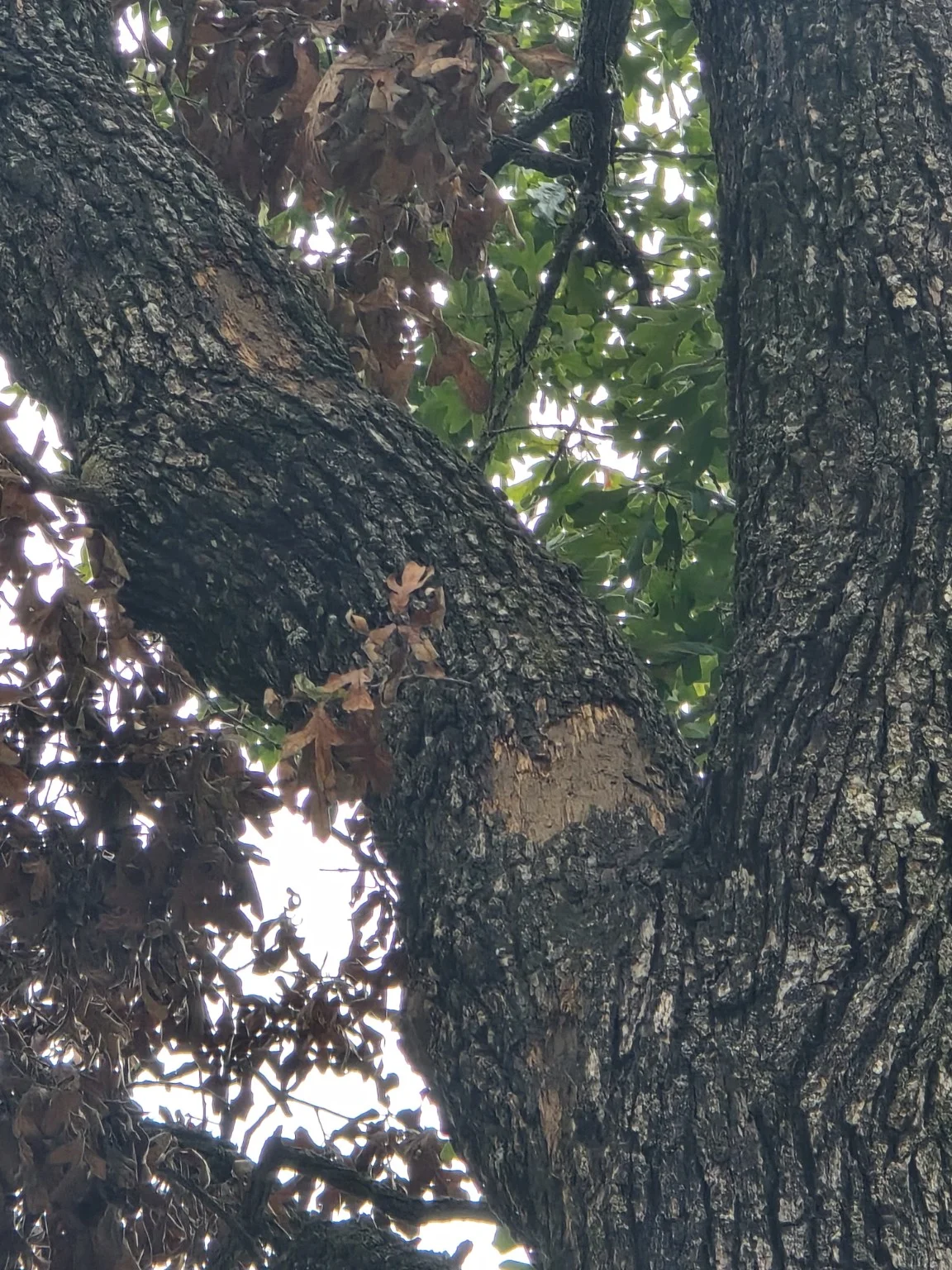
During a November 8 visit in Azle, we photographed an oak with areas of brown foliage and patches of missing bark on a large limb. Scott also observed light-brown spore buildup beneath the loose bark, a sign consistent with Hypoxylon canker. The wider view shows the tree beside a home, where understanding the condition of the branches matters as much as identifying the cause of decline.
This field example is described as suspected Hypoxylon canker. The images document visible canopy and bark changes; they do not establish a confirmed diagnosis or a removal recommendation by themselves. This is a separate tree from the Shoreline Sanctuary project below.
What is Hypoxylon canker?
Hypoxylon canker is associated with the fungus Biscogniauxia atropunctatum. It can remain in trees without causing obvious disease, then become destructive when a tree is weakened. Drought, heat, root injury, compacted soil, and drainage problems can contribute to that stress. Post oaks and other oak species can be affected.
What signs should homeowners look for?
- Thinning foliage, reduced growth, or dying branches.
- Bark separating from limbs or the trunk.
- Exposed fungal tissue that may appear tan, reddish-brown, olive, gray, or black as it develops.
Brown leaves and missing bark can have other causes. A closer examination of the exposed surface, affected wood, canopy, roots, and site history helps distinguish disease from other damage.
Can it be treated?
There is no established curative treatment for advanced Hypoxylon canker. Improving growing conditions helps protect tree vigor, but it cannot restore decayed wood. Management depends on the extent and location of damage; a limited branch problem and advanced trunk involvement require different decisions.
Why the tree’s location matters
Hypoxylon-associated decay can weaken wood. Affected limbs over a home, driveway, or gathering area need a structural assessment. Trees killed by the disease can be unsafe to climb; removal methods must account for that loss of strength. Keep people clear of visibly failing branches and seek an assessment rather than trying to inspect them from a ladder.
Shoreline Sanctuary Post Oak Removal
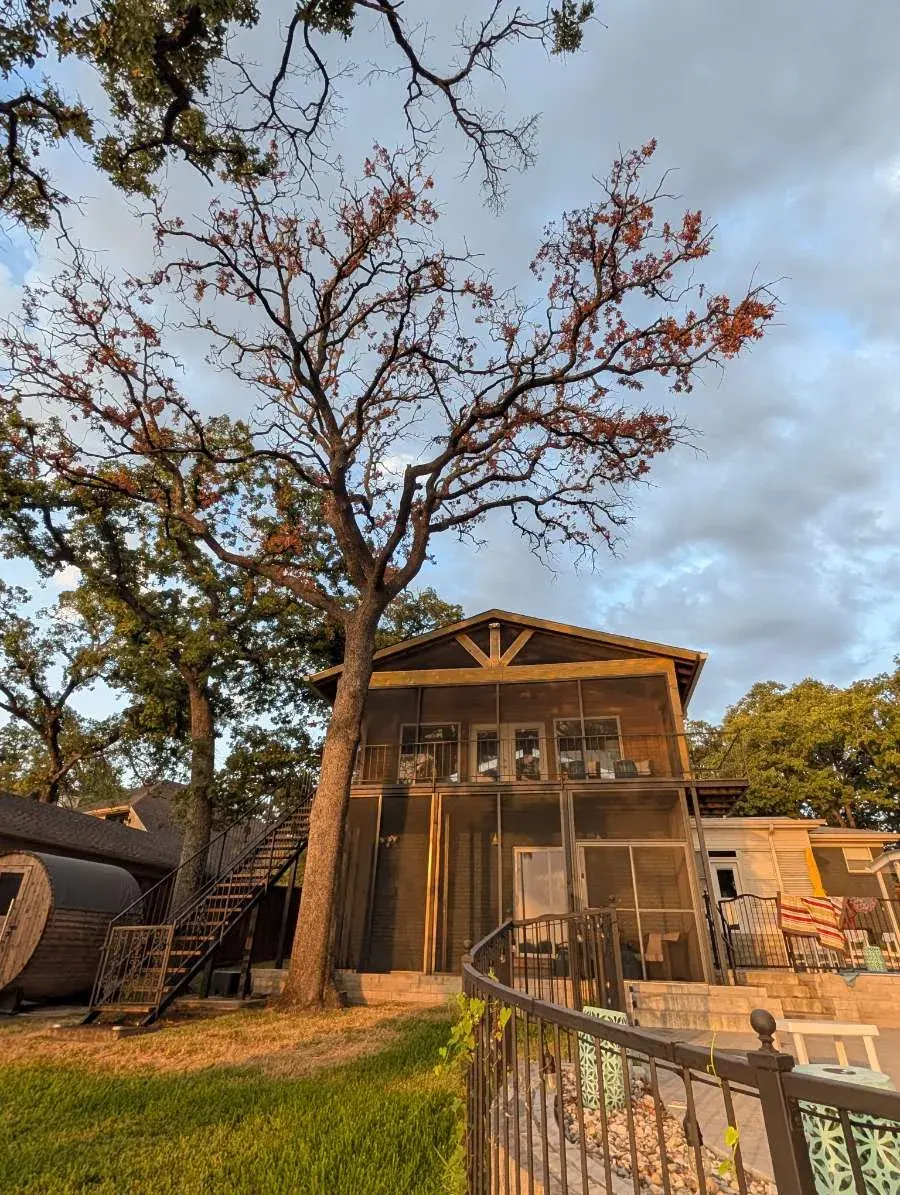
A declining post oak beside a home on Eagle Mountain Lake. See the signs discussed during the project and how the removal was planned around the property.
A separate project from the recent Azle assessment pictured in this article.
View the Shoreline Sanctuary project ↗Have a tree you’re concerned about?
Send us photos and a description of what has changed. Scott Case, ISA Certified Arborist TX-5220A, can discuss the next steps for an on-site assessment. We provide tree care in Azle, Eagle Mountain Lake, and nearby communities.
Explore tree health and diagnosis or Certified Arborist services. If the assessment supports removal, we can explain removal options and the reasons behind the recommendation.
Request a free estimate ↗Further reading
Disease information is informed by Texas A&M Forest Service: Hypoxylon Canker and Texas A&M AgriLife Extension: Hypoxylon Canker of Oaks. Field photographs: Case Tree Service.